
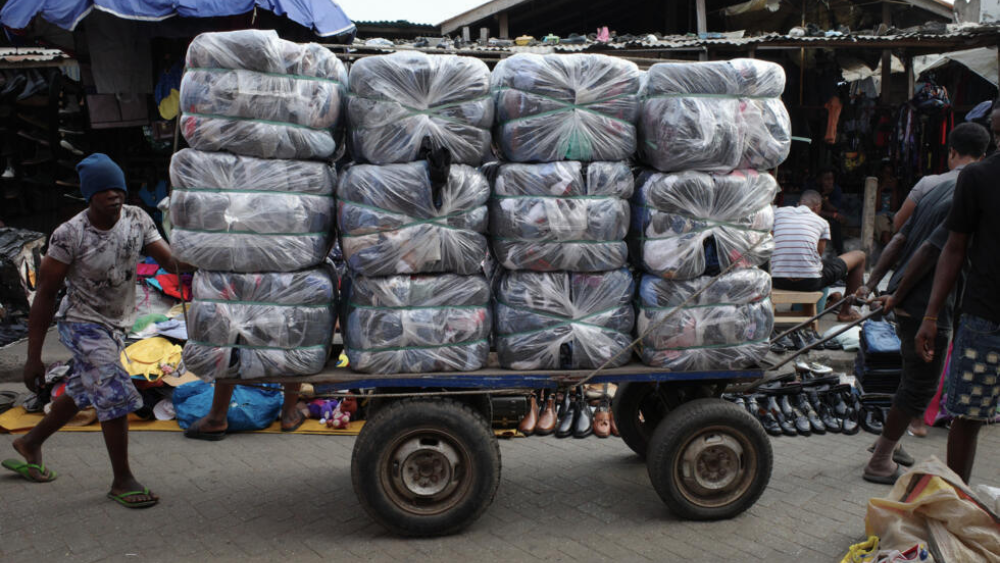
If charity shops are in crisis, it’s not the crisis we think it is. The root problem is our consumerism. The only long-term solution is buying less and paying more.
This article reveals how delusional our understanding of high street charity shops is, how it services environmentally disastrous consumerism, and how the future requires less demand and paying the true cost.
The charity shop crisis
Even if you never visit charity shops and have no idea what ‘Vinted’ means, you may have started seeing headlines like
Sheffield charity shops hit by Vinted boom feeling the pinch
Sheffield Star
Vinted booming, stores closing – but this is why Kent still loves its charity shops
Kent Online
The Guardian
Is Vinted really the villain: what does ‘the generosity crisis’ mean for charity shops?
Irish Independent
Vinted is a Lithuanian online app founded in 2008, now worth around a billion dollars.
Like a charity shop, Vinted sells old clothes.
Unlike a charity shop, the money goes to you and them.
These news articles focus on the domestic social implications of Vinted’s rise and charity shops’ demise:
- Cost of Living Crisis: We’re getting so poor we have to sell our old clothes.
- Moral Crisis: We’re getting so selfish we no longer donate to charity.
- Capitalism Crisis: Yet another human interaction is being ‘disrupted’ by a Silicon Valley Overlord who hoovers up all the cash.
Very few mention the uber-crisis driving all these sub-crises:
- The Climate Crisis: the bills are now coming in for our unsustainable lifestyle, we still think ‘growth’ is the answer, and don’t want to consider buying less or paying more.
All news, it seems, is climate news, but what can we do other than shrug our shoulders, say we’re all doomed, and console ourselves with ‘retail therapy’.
Is there an alternative to buying a new T-shirt to fill the space previously occupied by the old T-shirt, selling the old one on Vinted, or stuffing it into a bin-bag to take to the charity shop?
There is – skip to the end of the article if you think you know the answer, but to really understand the solution, we first need to fully understand the problem.
Before thinking about our life cycles, we must grasp the consumer society death cycle.
The death cycle of a typical charity shop T-shirt
Let’s start with a bin-bag crammed with used T-shirts, underwear, frocks, socks etc.
We have a few artistic choices to make before we write the death cycle mini-screenplay.
Donor
Shall we make the bin bag:
- placed carefully on a charity shop counter on a sunny day by a kind old lady, like Sally Field in Forrest Gump?
- thrown from a passing car by a tattooed arm at night to land outside a padlocked thrift shop door, landing in a pavement puddle reflecting blinking neon lights, Blade Runner style?
Either is fine. Once ownership is transferred to the charity shop, the provenance makes zero difference
Item
Which of the items in the bin-bag shall we follow?
The story arcs of the T-shirt, underwear, frock or sock are identical, but for dramatic purposes, shall we follow the journey of a single red T-shirt, like the girl in the red coat in Schindler’s List?
Nothing special, just a normal red T-shirt:
- Mostly cotton, maybe mixed with some petrochemical-derived fibres like polyester
- Stitched with petrochemical-derived threads like polyacrylonitrile (acrylic) or polyamide (nylon)
- Maybe with a button or two made from petrochemical-derived polyester resin.
- Coloured with Dichlorotriazine or Monochlorotriazine dyes
- Around 130-150 grammes, depending on your size
- Has already put around 12 kilogrammes of greenhouse gases into the sky
Process
If we decide to start with the bin bag, we’ll need to do some timeline-jumping at some point, to account for how the Red T-shirt got there.
Our Red T-shirt timeline won’t be as demanding as Back To The Future, but for clarity we’ll number each new owner as an ‘Act’ of this drama.
Each Act tells the story from the perspective of each successive ‘owner’, as our Red T-Shirt baton is passed from hand to hand.
This requires us to peep through the narrow aperture of each owner’s vision of their relationship with our T-shirt, Rashōmon-style.
Denouement
Not all T-shirts’ death cycles end the same way. We’ll provide three alternative final Acts for our Red T-Shirt story, labelled A and B, Sliding Doors style.
See which ending you prefer. Don’t worry if you don’t like either of them, we’ll provide a third alternative at the end.
Are you sitting uncomfortably? Then we’ll begin.
The consumer (Act 2)
SCENE 1: home, somewhere in Global North, interior.
CAPTION: 6 MONTHS AGO
CONSUMER A sprawls on one end of a sofa wearing a red T-shirt, browsing a fast fashion site on their mobile phone.
CONSUMER B sprawls at the other end, doing the same.
CONSUMER A, zooming in on RED T-SHIRT: Ooh, I like that red.
CONSUMER B (glances over): Uhuh. Looks great. (returns to own shopping site)
CONSUMER A : I need a new T-shirt (adds RED T-SHIRT to basket).
SCENE 2 : same home, exterior.
CAPTION: 2 DAYS LATER
COURIER hands an electronic device to CONSUMER A, who has an opened package under one arm with folded RED T-SHIRT visible.
COURIER: Sign here please. Just use your finger. Any squiggle will do.
SCENE 3: same home, interior.
CAPTION: 2 DAYS AGO
CONSUMER A sprawls on one end of a sofa wearing RED T-SHIRT, browsing a fast fashion site on their mobile phone.
CONSUMER B sprawls at the other end, doing the same.
CONSUMER A: Ooh, I like that red. I need a new T-shirt. (adds to basket).
SCENE 4: same home, exterior.
CAPTION: 2 DAYS LATER
COURIER hands an electronic device to CONSUMER A wearing RED T-SHIRT, who has an opened package under one arm with another slightly different shade of red T-shirt visible.
COURIER: Sign here please. Just use your finger. Any squiggle will do.
SCENE 5: same home, interior.
CAPTION: YESTERDAY
CONSUMER A stands at overflowing walk-in closet, wearing new red T-shirt, holding old RED T-SHIRT.
CONSUMER B lies on bed, shopping on phone.
CONSUMER A: This place needs more storage space. Time for a clear out. (starts stuffing clothes into a bin bag, including RED T-SHIRT).
CONSUMER B: Why not sell it on Vinted? The electricity bill has just gone up again.
CONSUMER A: The other pile with the expensive stuff is for Vinted. No one’s going to pay for these cheapo clothes.
SCENE 6: Charity shop, somewhere in Global North, interior.
CAPTION: 10 minutes ago
CONSUMER A, wearing new red T-shirt, places large bin bag on counter.
CHARITY SHOP VOLUNTEER A averts her head slightly as she opens bag, removes RED T-SHIRT and holds it up at arms length.
CHARITY SHOP VOLUNTEER A: Thank you so much for your generosity and support. It means so much to the terminally ill/cancer victims/abused donkeys.
CONSUMER A: You’re so welcome. It’s the least I can do. I’m happy to help. I’ve had personal experience of a terminally ill person/cancer victim/abused donkey and want to do my bit to support your good and important work.
The charity shop (Act 3)
SCENE 1: Back room of same charity shop.
CAPTION: NEXT DAY
CHARITY SHOP VOLUNTEER A and CHARITY SHOP VOLUNTEER B, wearing gloves and masks, surrounded by piles of bin bags with clothes spilling from them.
CHARITY SHOP VOLUNTEER B holds up RED T-SHIRT.
CHARITY SHOP VOLUNTEER A: Just look at all this crap. I’ve told the desk to stop taking any more until we get rid of this lot.
CHARITY SHOP VOLUNTEER B: What about this red T-shirt? Would anyone buy it?
CHARITY SHOP VOLUNTEER A: Nah. It‘d cost more to wash than anyone would pay for it anyway.
CHARITY SHOP VOLUNTEER B: I’ll bung it in the pile for the rag man then.
The manufacturer (Act 1)
SCENE 1: Global South garment factory, interior.
CAPTION: A YEAR AGO
FAST FASHION BUYER sits at a desk scattered with T-shirts in various shades of red.
GARMENT FACTORY MANAGER sits opposite.
Both have laptops open in front of them.
FAST FASHION BUYER: Our AI tool predicts this shade of red will outsell our current red T-shirt if you can deliver three container-loads to our warehouse within 14 days.
GARMENT FACTORY MANAGER: How does it know?
FAST FASHION BUYER: No idea. I’m the only buyer left in the fashion team. I think they may get rid of me too soon.
GARMENT FACTORY MANAGER: Same here. It’s all robots here now.
FAST FASHION BUYER: So can you deliver 3 containers within 14 days?
GARMENT FACTORY MANAGER (taps on laptop for a bit): Our tool says we can deliver within 12 days.
FAST FASHION BUYER (taps on laptop for a bit): The best your competitors can bid is 13 days. Deal.
GARMENT FACTORY MANAGER (turns laptop round to face FAST FASHION BUYER): Sign here please. Just use your finger. Any squiggle will do.
The rag man (Act 4)
SCENE 1: Global North rubbish dump (‘waste management facility’), exterior.
DUMP MANAGER and DUMP WORKER in hard hats and hi-viz jackets stand by a huge pile of old clothes.
RED T-SHIRT is visible.
DUMP MANAGER: That lot needs to go to the rag factory by the end of the day.
DUMP WORKER: Sorry boss. They’re not even halfway through the truckload we delivered last year.
DUMP MANAGER: Damn. Dump it all in landfill then.
DUMP WORKER: No space left.
DUMP MANAGER: Then burn it.
DUMP WORKER: No space left. There’s still that entire yard full to incinerate first.
DUMP MANAGER: Do we have any quota left to ship it to Turkey?
DUMP WORKER: Nope.
DUMP MANAGER: : Bangladesh?
DUMP WORKER: Nope.
DUMP MANAGER: China?
DUMP WORKER: Not since years ago, boss. They’ve got their own rubbish to deal with.
DUMP MANAGER: Any ideas? We’ll run out of space unless we get rid of this before our trucks come back tomorrow with more rubbish.
DUMP WORKER: Those African blokes might take it off our hands.
DUMP MANAGER: Call them now.
The British second life (Act 5A)
SCENE 1: same dump, moments later.
DUMP MANAGER and DUMP WORKER in hard hats and hi-viz jackets stand by a huge pile of old clothes.
RED T-SHIRT is visible.
DUMP WORKER dials on mobile phone.
Suddenly CHARITY SHOP VOLUNTEER A appears in a floaty white dress.
CHARITY SHOP VOLUNTEER A: Stop! We’ll take all that!
DUMP MANAGER: Hang up.
DUMP WORKER cancels call.
DUMP MANAGER: You sure you want this? This is the reject pile from all the other charity shops. Including yours, I think.
CHARITY SHOP VOLUNTEER A picks up RED T-SHIRT and hugs it to her breast.
DUMP MANAGER: Madam, I’d wear gloves if I were you.
DUMP WORKER: And a mask. That stuff really honks.
CHARITY SHOP VOLUNTEER A: No need! We have five pink trucks outside ready to take all this away, this very moment!
Fade briefly to black.
When we return, DUMP WORKER is fanning prone DUMP MANAGER while speaking on his mobile.
DUMP MANAGER: Where’s that charity shop volunteer with the five pink trucks gone?
DUMP WORKER (speaking on phone): Hang on, we may only need the paramedics. He’s just come round, but still seems to be hallucinating. I think it might have been the stench from this pile of old clothes.
The African second life (Act 5B)
SCENE 1: Kantamanto Used Clothes Market, Accra, Ghana, exterior.
WESTERN CONSULTANT in suit and tie interviews OBONRI WAWU TRADER as she sells to passing customers.
AFRICAN ENTREPRENEUR chats to the trader at the next stall.
WESTERN CONSULTANT writes words in his notebook.
RED T-SHIRT is visible on her stall.
WESTERN CONSULTANT: And what language is ‘obonri wawu’?
OBONRI WAWU TRADER: Akan.
WESTERN CONSULTANT: And what does it mean?
OBONRI WAWU TRADER: ‘Dead white man’s clothes’.
WESTERN CONSULTANT: What do you do with the clothes you can’t sell?
OBONRI WAWU TRADER: It becomes bola.
WESTERN CONSULTANT: ‘Bola’?
OBONRI WAWU TRADER: Akan for ‘rubbish’. The bola foos take it away at the end of the day.
WESTERN CONSULTANT: ‘Bola foos’?
OBONRI WAWU TRADER: Rubbish collectors.
WESTERN CONSULTANT: Do you know how much is taken away in total?
OBONRI WAWU TRADER: My cousin is a bola foo. He says usually 100 tonnes a day.
WESTERN CONSULTANT: And what do they do with it?
OBONRI WAWU TRADER: Dump it in the sea with the other rubbish you guys send us and no one wants, like old electronics stuff.
WESTERN CONSULTANT (stops writing): Jeez.
AFRICAN ENTREPRENEUR joins WESTERN CONSULTANT.
AFRICAN ENTREPRENEUR: So what do you think? Lots of demand for clothes, no?
WESTERN CONSULTANT: Oh sure, everyone needs clothes. As Africans get richer, they’ll buy more clothes, just like us.
AFRICAN ENTREPRENEUR: So do you think Western countries will invest in my garment factory project?
WESTERN CONSULTANT: No.
AFRICAN ENTREPRENEUR: But you just said demand is on the up-and-up! Africa grows 7-10% of the world’s cotton, and pumps 7-10% of the world’s oil. Doesn’t it make sense to use our own raw materials to make our own textiles and garments here?
WESTERN CONSULTANT: I thought it made sense. That’s why I agreed to advise you.
AFRICAN ENTREPRENEUR: So why the long face? Look at all this demand? Do you think the colonialists still want all those dirty textile mills and labour-intensive garment factories in their backyards? Can’t Africa add a bit of value here, instead of exporting cheap raw materials and buying back your expensive clothes?
WESTERN CONSULTANT: We’ve been through all that. I no longer think that’s the problem.
AFRICAN ENTREPRENEUR: What did this obonri wawu trader just tell you to change your mind? Do you no longer think we need an indigenous garment industry in Africa?
WESTERN CONSULTANT: You definitely need it, and absolutely deserve it. The problem isn’t lack of demand in Africa, it’s the over-supply from the West. No matter how good a garment maker you are, you’re never going to be able to sell it cheaper than all this free stuff. There’s 15 million items coming over here in bin bags every week.
2B and not 2A, that is the question…
Most of us never consider the connection between us ‘donating’ to a charity shop, and condemning Africa to poverty and environmental degradation.
But just because we’d rather congratulate ourselves for our charity than berate ourselves for our cruelty, doesn’t make it any less true. It’s physics, ultimately.
When Global North citizens see images of dirt-poor, famine-stricken, destitute African refugees wearing familiar Manchester United football tops, it’s not because they spent £130 buying this season’s official strip. It’s because we did. We then threw it away, or ‘donated it to a good cause’, until it ended up in one of Africa’s thousands of ‘dead white man’s clothes’ markets.
The cost of living, moral crisis and capitalism crisis are all symptoms of our climate crisis, which is driven by our consumption.
And our consumption is driven by us mistaking ‘needs’ for ‘wants’.
We need to eat, drink, shelter, clothe ourselves, get around, have fun, pursue pleasure etc. etc.
But we don’t need to eat and drink more than is healthy. We can get pleasure from a walk in the park with an old friend as well as a ‘holiday of a lifetime’ with someone we’re trying to impress.
We can only live in one house, drive one car at a time, or wear one set of clothes at a time. If we want to have a choice of T-shirts that’s fine, but we should at least have a number in our head of the point at which ‘need’ becomes ‘want’.
We need to learn to remind ourselves – and each other – that we’re not obliged to buy anything – or throw anything away, or ‘donate’ them to a charity shop – just because they’re cheap.
If they were twice the price, would we buy half as many?
If the price of clothes and food reflected the actual environmental cost, would we not just take more care of things, and repair them, like we used to?
Here’s an alternative, sustainable version, that provides a demand solution, rather than exacerbates the supply problem.
The consumer (Act 2B)
SCENE: home, somewhere in Global North, interior.
CAPTION: 6 MONTHS AGO
CONSUMER A and CONSUMER B sit side by side on the sofa, chatting to each other.
That’s it. No drama.
*
The See Through Network promotes sustainable solutions that involve getting more from what we have, without losing anything.