
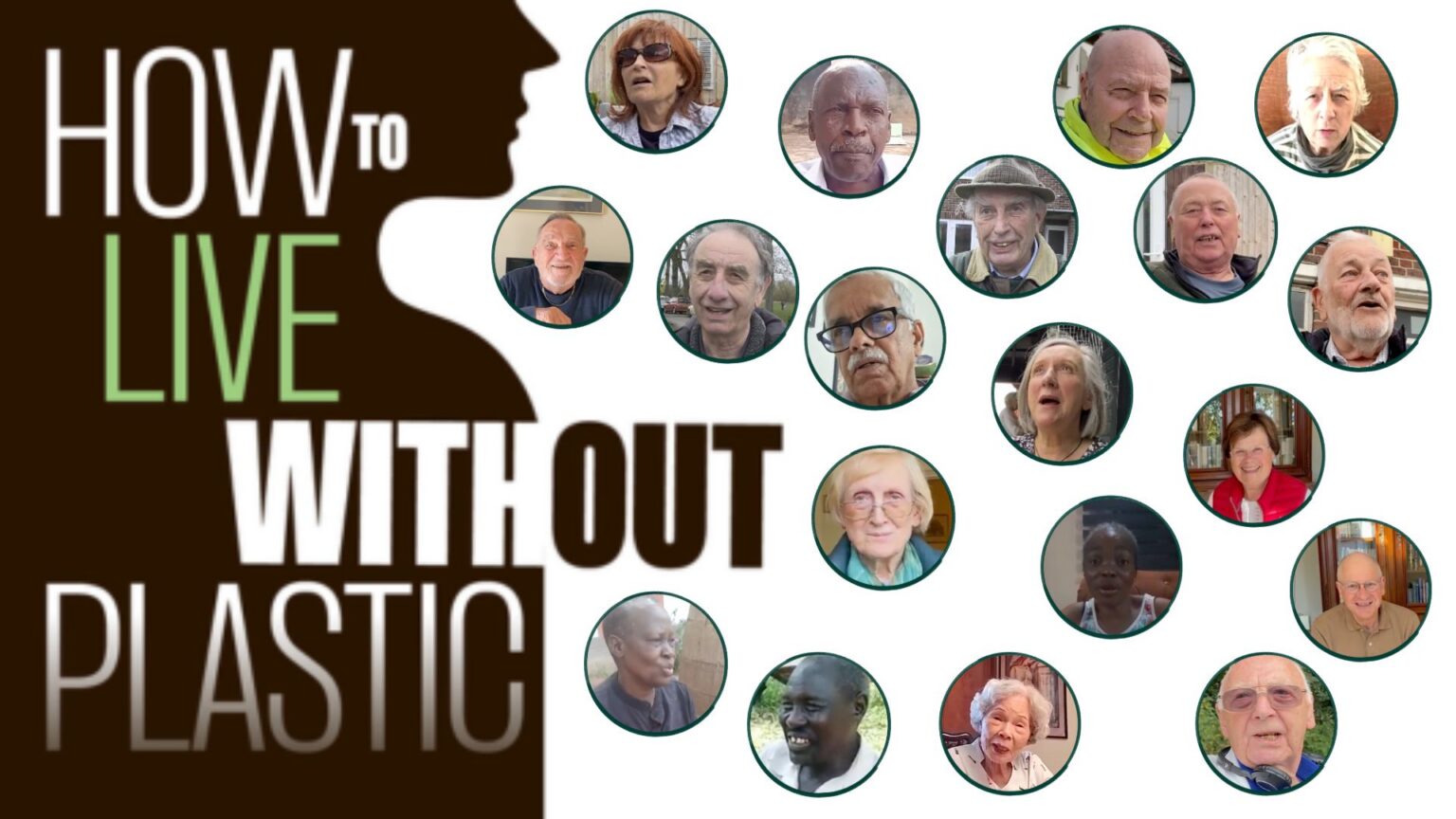
Help pave the way to a sustainable future by preserving the collective wisdom of our elders in an open-source database. If you have a smartphone and know someone old enough to remember life before plastic, you can join How To Live Without Plastic’s global team of citizen-researchers.
This article explains how you, the reader, can invest an hour or so to empower an old person, experience a profound human engagement, and inspire others to imagine a world without plastic, by recording an interview with one of the diminishing cohort of humans who grew up in a pre-plastic age.
Why How To Live Without Plastic?
How To Live Without Plastic is an innovative call to action for anyone wanting to take meaningful action toward a more sustainable future.
It’s a free, open-source, global database of interviews with people describing how they lived in the pre-plastic age.
For anyone born after the ‘60s, when this oil industry by-product first started infiltrating our lives, bodies, oceans, sea-beds, mountain tops, water courses and foetal bloodstreams, it’s hard to imagine a world without plastic.
But there’s a diminishing number of us who remember exactly how we carried food, constructed buildings, farmed, ran hospitals, transported ourselves and packaged everything before cheap, convenient, durable, disposable, unbiodegradable, petrochemical byproducts were indispensable.
In the Global North, you’d need to be born before 1960 at the latest to have clear childhood memories of life without plastic.
In the Global South, people born in the 1970s are blessed with such wisdom.
Anyone born into the Plastic-cene era, suffers from an ignorance only afflicting the last 0.02% of Homo sapiens’ 300,000-year existence.
What Is How To Live Without Plastic?
The quickest answer, if you have four minutes to spare, is this introductory video.
If you want the closest thing to seeing what the How To Live Without Plastic website will look like, you can browse a selection of interviews from around the world at the How To Live Without Plastic YouTube channel.
As well as viewing the entire unedited interviews, as sent to us by See Through Together contributors around the world, you can browse playlists sorted by:
- Born in the 1920s
- Born in the 1930s
- Born in the 1940s
- Born in the 1950s
- Born in the 1960s
- Born in the 1970s
- Continent: Africa, Americas, Asia, Europe
- Nation: France, India, Nigeria, Taiwan, Uganda, UK, USA etc.
You can also see examples of themed compilation videos, compiled from sound bites taken from the How To Live Without Plastic archive.
Is How To Live Without Plastic live yet?
The interactive web app is due to go live by the end of 2026.
Subscribe to the See Through newsletter and/or the How To Live Without Plastic YouTube channel to be alerted when it’s ready.
When it’s live, anyone in the world can access the database, and send their own video recordings to add to the archive.
In the meantime, anyone is welcome to submit an interview video so there’s a wide variety of material at launch.
How Can I submit a How To Live Without Plastic interview?
STEP 1: Ask an old person
You probably already know someone who knew a life before plastic – a family relative, local neighbour, work colleague or someone in your community.
If not – make a new friend!
Explain what How To Live Without Plastic is, to make sure you have their informed consent about sharing their experiences in a public archive.
The quickest way is probably to show them the introductory video or YouTube channel
STEP 2: Record an interview
Before hitting record, read this article for tips about recording good quality videos with your smartphone, and some suggested questions. Let them speak in whatever language they feel most comfortable in, even if it’s not the same language you use to ask the questions.
STEP 3: Fill in Form
Don’t forget to fill in the form with the interviewee’s details. We want to spell their names correctly (though they don’t have to give their full or real names if they don’t want to), and to know what year they were born, whether they grew up in the city or countryside, their education and gender.
We’ll also need your contact details, in case we have any queries, or need help with translation (we’ll use automated translation apps, which are generally quite good now if the audio is clear, but may need help for poor audio or uncommon languages).
STEP 4: Delivery
When the website is live, this will be automated. In the meantime, email: htlwp@seethroughtogether.org
- If your video is around 30MB or less, you should be able to attach it to the email.
- If it’s too big, let us know which platform you find easiest (WhatsApp, Messenger, Instagram, email, WeTransfer, Google Drive etc. etc.) and we’ll email you back with some alternative methods.
- If you know how, please rename the video file as HTLWP followed by the interviewee’s name, year of birth and country (e.g.: HTLWPJuanConeja1932Spain), to avoid mix-ups.
All this should take no more than an hour or so of your time, altogether.
All the interviewers who have tried it so far have found it fun and interesting. Most have discovered something unexpected. Some have been profoundly moved.
More importantly, the interviewees have all found it equally fun, interesting, unexpected and moving,
Being asked by young people with smartphones to impart wisdom so that our children may thrive in the future makes a nice change from being treated as a dusty archive of obsolete history.
Can I use the archive to edit a themed compilation video?
If you know how to capture video from the internet, by all means help yourself and send us your completed video for us to upload to the Compilations playlist, crediting you.
Initially, anyone can browse all the interview transcripts and translations, but only See Through Together colleagues will have access to the raw interviews.
Once the database is live, you can browse the transcripts, pick out your favourite soundbites, order them, and request the See Through team to turn into your bespoke compilation edit, with your name credited.
Phase II of the database, currently being developed, will allow anyone in the world to automatically edit their own compilation video, based on whatever theme they like, and add it to the public archive.
If you’d like to help make that happen, here’s how.