
As a student in China in the 1980s, I had a year off from the consumer society and learned how less can be more. I miss it.
This article challenges the supposed cons of a non-consumerism-based economy through lived experience of its pros.
By Robert SternWriter Stern
My accidental self-experiment
In 1984, a few months into university, I chose to ditch Politics & Philosophy in favour of Chinese.
That’s how I ended up turning twenty at a provincial university in the People’s Republic of China, during the year I spent there 1984/5.
My main motivation was adventure, but over the subsequent four decades, I’ve come to see that year as:
- a year-long self-experiment in consumer culture withdrawal
- a lesson in what a sustainable future may look like, whether we choose it or not
Four decades on, what’s changed?
- China has risen from basket case to superpower.
- We’re drowning, burning and shrivelling pretty much as climate scientists were starting to forecast back then
- I realise I learned a lot more than Chinese during my year there.
A child of consumption
Three weeks after my first birthday in London, the Cultural Revolution kicked off in Beijing.
My first ten years of life thus coincided with China’s decade of counter-revolutionary self-harm, but it would be another decade before I spent a brand-free year there.
During my teenage years, I was as ignorant about the ‘sleeping giant’ as everyone else I knew. I could have told you that one in every five humans was Chinese, and that China had a long history, but little more.
In the ‘70s, Britain was undergoing its own rapid decline from superpower status. This probably made the country particularly introspective, but there were few reasons for China to appear on anyone’s radar. The Red Guards were tearing it apart largely in private. The newspapers didn’t mention China much, and what I’d read had left me with a vague notion of it being a peripheral, wounded, backward recluse.
By 1983, when I was picking a third course to add to my Politics and Philosophy classes, I didn’t know much more about the place. My Fresher’s Week decision to try Beginner’s Chinese was all whim and no strategy, but I loved learning how to write characters.
When I realised the government paid for second-year students of Chinese to spend a year in the People’s Republic, I booked my place by switching majors.
To a British student in 1984, China held an exotic appeal as a Communist museum. I imagine my twenty-something daughters probably see North Korea in similar terms today. If they think of it at all, they probably think ‘political experiment gone badly wrong’.
So when I arrived at Shandong University in September 1984, I had no idea I was about to conduct my own self-experiment in consumer sociology.
I would spend the next year not just learning Chinese, but experiencing a year without advertising, brands and consumer culture.
Ration tickets
Getting to grips with life in Communist China was disorienting.
No one spoke English. With only a year of elementary Chinese, my classmates and I could barely communicate.
Having been shown how to withdraw our student stipends from the People’s Bank of China, we discovered:
- The crisp, colourful bank notes we were issued, that looked like they’d come from a Chinese version of Monopoly, were ‘Foreign Exchange Certificates’, or FEC.
- FEC was a foreigners-only funny money that could only be spent on imported goods at special shops.
- Jinan didn’t have any such special shop.
- Everyone else used grimy and crumpled ‘renminbi’ (RMB) notes.
- Even once we got some of the grimy, crumpled stuff, the only things available to buy were food and clothes.
- Food and clothes shops required grain and cloth ration vouchers, as well as money.
We felt like we’d stepped from a time machine, or were experiencing first contact with a society yet to enter the consumer age.
At primary school, we’d had school trips to museums showing everyday life during World War Two. We’d dressed up as evacuee children escaping the Blitz. We had homework assignments to interview our parents and grandparents about their wartime memories.
Being a student in China in 1984 felt like cosplaying our parents’ Make Do And Mend’, ‘Dig For Victory’ WW2 childhoods.
Four decades on, Chinese primary kids find stories of ration tickets, import restrictions, and dual currencies just as exotic, weird, and unimaginable. Impelled by sustainability and saving money, China’s youth are turning to second-hand goods.
Government policies often promote thrift and frugality as core Confucian values, but can’t afford to push it too hard for fear the economy stalls, and they fail to meet growth targets.
Food without shops
Everybody’s gotta eat.
The newly-constructed (but already derelict-looking) Foreign Students Block had a canteen. The first day, it served palatable pork, cabbage, rice and mantou steamed buns. And the next day. And the next…
We realised that if we wanted to eat anything else for the next year, we’d have to see what our grimy crumpled renminbi, and ration tickets, could buy.
Jinan, a city of two million, had three places selling cooked food to anyone with the requisite cash and grain ration tickets. The dumpling joint, the noodle place and the hotpot restaurant all served delicious and absurdly cheap food, but they were a long walk, cycle ride or bus trip away.
Their limited menus also made them gastronomically boring before long, to palettes used to variety.
Fortunately, by 1984 it had just become possible to buy food in Jinan.
Since 1978, economic reforms were rolling out nationwide, allowing peasants to grow and sell their own produce.
After handing over their quota to the old centralised economy collective farms, they were free to sell anything else for profit. More and more peasants were starting to ‘get’ capitalism. This meant we could buy the fruits of their labour, figuratively and literally.
We soon located a couple of streets where we could buy fresh fruit and vegetables.
Dust-covered peasants in drab blue and green Mao suits arrived from surrounding villages in the back of lorries, on bicycles, and via donkey carts.
They’d spread sheets on the roadside, pile them with mounds of produce – onions, tomatoes, eggs, mushrooms, peppers, potatoes, spinach, nuts, etc. Each peasant usually only had one or two products, but cumulatively there was quite a wide selection of seasonal fruit and veg.
The farmers would squat on their heels, smoke, chat with each other, and wait for customers.
They’d charge by the ‘jin’ (500g) or ‘liang’ (50g), using hand-held scales. I’d only seen them in images of blindfold Lady Justice holding metaphorical scales, but every vendor had one. They’d load a dish with whatever you’d chosen, nudge the scales along the notched scale until they dangled evenly with a weight, and bark out the weight and price.
Back then, this felt like an exotically primitive way to buy food. If you replaced the dusty sheets with artisan trestle tables, and the Mao suits with smart casual, we’d now call them ‘local organic farmer’s markets’.
Four decades on, China’s supermarkets are now indistinguishable from those in the West, with chillers, barcodes on plastic packaging, fluorescent lights, processed food and scan-and-pay self-checkouts.
Chinese citizens now have the freedom to shop for food while touching nothing but plastic. They too can complete their purchase without talking to a real person. They too can return home with no idea who grew their food, or where it came from.
But Chinese consumers are also now starting to yearn for ‘real’ food. Motivated by health, safety, and environmentalism, they too seek ‘honest’ food from trustworthy sources. They too want to buy directly from the growers, with no plastic packaging, preservatives and pesticides.
Buying cloth, not clothes
Stomachs satisfied, we wondered where we could use our cloth ration tickets in 1984 China.
Not everyone wore the standard-issue Mao suits still favoured by the farmers. Some women wore stylish and colourful outfits, some men sported Western style jackets, or even suits.
But there were no clothes shops, and few brand names visible on the dresses, suits and tops.
My more fashion-conscious classmates soon cracked this mystery. They found cloth shops, with bolts of material arrayed upright in front of the counter, or stacked horizontally on shelves behind it.
There were no polyester, nylon or acrylic textiles, but a surprisingly wide variety of cotton, wool and silk cloths, plain and striped, in printed and woven patterns.
A bit of pointing and pantomime, and basic phrases, plus cash and cloth ration vouchers, would secure as much cloth as you could carry.
At the markets, alongside the peasants with their piles of produce there were tailors and seamstresses. They’d stand by trestle tables with pedal-operated sewing machines, rows of pins ready in their lapels, a basket of coloured threads, and disks of chalk to mark cutting lines.
Show them a picture of what you wanted, or give them a sample to work from, and these streetside tailors and seamstresses could knock out bespoke couture for even less than the already ridiculously cheap cloth you’d brought them.
Four decades on, China is the home of fast fashion and cheap-as-chips throwaway clothing. Chinese are unrecognisably well-dressed. Luxury fashion brands around the world depend on Chinese customers, and face competition from Chinese fashion brands.
The only sewing machines you’ll find are in factories, with operators increasingly replaced by robots. The fresh-faced tailor and seamstress entrepreneurs operating the pedal-operated streetside machines are now wrinkled, their skills obsolete and dying with them.
But China too has an emerging youth ‘crafting’ culture of young people wanting to thread a needle, learn to knit, using natural fibres, not petrochemicals. They too seek meaning through making.
Shopping without brands
In 1984, Jinan had one shopping emporium.
The city’s flagship 百货大楼 (bǎihuò dàlóu or ‘hundred goods big building’) had several floors. You could see a variety of consumer items beneath its glass counters, and behind them, but could only touch products with the intervention of a shop assistant.
The shop assistants were usually dozing, heads resting on their forearms, slumped over the glass counter. Buying anything required first disturbing their slumber.
China had a few brands. Some prestigious lines, like bicycles, even had competing brands. We all bought our bikes at the Hundred Goods Big Building. Being foreigners flush with cash, we could afford Feige ‘Flying Pigeons’, then the Rolls-Royce of Chinese bicycles.
Flying Pigeons looked indistinguishable from their ‘sit-up-and-beg’ competition, like the Fenghuang (‘Phoenix’) and Yongjiu (‘Forever’), but didn’t break down so frequently.
But these were the exceptions. Even at the Hundred Goods Big Building, most items were generic.
The closest they came to branding were the labels indicating the state-run factory that made them:
- toothpaste from the Shanghai Number Five Pharmaceutical Factory
- jam from the Guangdong Number Three Cannery
- padded shoes from the Tianjin Number One Footwear Works, and so on.
Four decades on, China’s national network of multi-lane motorways are clogged by cars, and China dominates the global EV market.
Domestic bicycle sales peaked in the ‘90s, but are now experiencing an uptick. Urban cycling is starting to be seen not as a poor man’s car, but as essential to sustainable and active mobility.
Not ‘which’, but ‘if’
We soon learned there was something far more important than which brand – whether or not they had anything at all.
Centralized economies tend not to make everything available all the time. There would be sudden, inexplicable gluts and dearths of everything from apples to shampoo.
One week there’d be mountains of carrots, or peaches, the next, none. For food this was usually, but not always related to them being in season. But buckets, belts or buttons could also suddenly be abundant, or absent, at random.
We had no need to count the pennies, but did note that feast or famine made no difference to the price.
Instead of asking what brand options were available, we got used to prefacing our questions about availability of any particular good with ‘yǒu méiyǒu’ (literally ‘is there or isn’t there’).
This made shopping a much more immediate, grounded experience. Shopping lists consisted of product descriptions (‘soap, beer, biscuits’), not brands (‘Pears, Heineken, Hobnobs’).
To us, brought up in a consumer society where more choice meant better, this required quite a re-set.
Shopping took on a different significance when it was a question of ‘if’, not ‘which’.
- When there’s a glut, stockpile.
- When nothing is available, improvise, substitute or wait.
Shopping demanded seasonal awareness, creativity and stoicism.
Four decades on, China is not only the world’s factory, but the world’s shopping centre. Continued growth and prosperity have turned producers into consumers. Chinese consumers are all too familiar with dynamic pricing.
Three of the world’s eight biggest shopping malls are in China. Interestingly, two are in Iran, but China’s overall consumption is second only to America’s.
Yet their appetite is waning. Chinese economic growth is becoming more dependent on exports, as Chinese domestic consumption stagnates. Maybe they just have enough stuff now, and buying more doesn’t make them any happier.
Needs and wants
My year in 1980s China gave me a lifelong appreciation of the difference between wanting something and needing something.
My ‘necessity’ may be your ‘indulgence’. Once we’re fed, watered and sheltered, ‘luxury’ becomes relative, a matter of opinion.
In the weeks after we stepped out of our time machine, and our Chinese language improved, my classmates and I received a salutary lesson in how identical objects can carry very different subjective meanings.
For the first few weeks, when shopping required pooled research, pantomime and a lot of presumption, we made the most of our collective retail experiences. It only took one of us to stumble across a desirable product for us all to have one.
Someone found some light cotton knit tracksuits, which were just right as the autumn chill set in. Before long, we were wearing them while jogging, playing football or volleyball, or trying tai chi.
Then someone returned showing off an amazing padded silk dressing gown, embroidered with gold dragons and phoenixes. Soon we were all wearing them, like colonial administrators gone native.
And when someone returned triumphant from the Hundred Goods Big Building, having cracked the toilet paper problem, we were all grateful. It came in stacks of foot-square pink sheets, was luxuriously soft and absorbent, and we’d take turns in buying a load. We were tickled to buy it by weight – four jin (2kg) was quite a stack of pink toilet paper squares to strap on the back of our Flying Pigeons and balance all the way back to the Foreign Students Block.
As our Chinese improved, the salutary lessons emerged:
- the dressings gowns were funeral shrouds for corpses
- the tracksuits were underwear
- the toilet paper sheets were sanitary towels
Not everyone needs to learn the difference between needs and wants by cycling through a provincial capital, wearing underwear, balancing two kilos of sanitary towels, but it’s certainly stuck with me.
Four decades on, China produces not only its own consumer goods, but much of the world’s. China’s status as the world’s offshore factory means it now emits a third of total global emissions.
This is way more than the US (12%) in second place, and India (8%) in third, but a significant proportion of these emissions are for export goods to countries that have ‘exported’ their emissions to China as they deindustrialise.
Exactly how much, and who is ‘responsible’ for these emissions, requires far more forensic carbon accounting of Scope 3 emissions than is currently available.
While countries bicker about such allocations and responsibilities, atmospheric physics remains indifferent to who emitted which greenhouse gas molecule, where and when. Carbon emissions will continue to blanket the planet, raising temperatures.
A world without ads
Had my purpose been to experience life entirely without any brand or hint of a consumer culture, 1984 was actually just a little too late.
In trend-setting Guangzhou, Shanghai and Beijing, capitalism’s green shoots were already starting to emerge from the scorched earth of the Cultural Revolution.
Those shoots would spread to the provinces over the next few months, but when I arrived in Jinan, eight hours by train from Beijing, in 1984, it felt like I’d time-travelled to a pre-consumer age, before the invention of adverts.
After a childhood of TV commercials, omnipresent advertising hoardings, and ads on every page of the newspaper, their absence was striking.
Major intersections and public spaces had billboards, but instead of promoting things, they promoted ideas.
The only slogans were for Chinese Communist Party Central Committee policies, such as:
- Faded posters from the ‘70s, urging the workers of the world to unite or long life to Mao Zedong Thought
- Fresher posters about China’s one-child policy, started in 1979
- Even fresher posters extolling gender equality and deploring bourgeois favouring of boys over girls, as the consequences of the one-child policy kicked in
Fascinating, in retrospect. The twenty-year-old me, however, found billboards promoting social policies rather than consumer brands amusing, and quaintly backward.
When we arrived in Jinan, the only recognizable advertisement was a huge poster for a movie about Marco Polo.
It was still there when I left a year later. Like all films then, the Marco Polo movie was made by a state-run studio under the direction of the Propaganda Department, so was just a different flavoured political slogan.
On my first trip to Beijing, I saw what cutting-edge advertising looked like in China’s capital in 1984. Near the main railway station, huge billboards featuring dramatic war scenes featured what was clearly a logo and brand name.
It looked like the first ad I’d seen for a product, rather than propaganda, until I deciphered the Chinese characters.
洲际弹道导弹 (zhōujì jìndàodǎodàn), it turned out, meant ‘intercontinental ballistic missile’.
‘Must remember to get a couple next time I nip down the shops’, I wrote in my diary.
Forty years on, commercialism is just as rampant in China as anywhere else. Billboards now advertise consumer brands, not missiles. On buildings, in taxis and on devices, ads are everywhere.
Beijing may retain greater control over the economy than non-Communist countries, but China’s leaders are just as concerned about delivering economic growth. Their risks of not delivering may be more severe.
China’s internet firewall insulates it from influences its government deems undesirable, but China’s consumers, just as bombarded by online ads, are also voting with their wallets, and buying less.
Paralysed by toothpaste
It’s taken decades for me to fully appreciate all the lessons about consumerism, advertising, capitalism, and growth, from my brand-free year in China.
But one thing struck me the day after I returned home to London, after my year’s time-travel.
I’d run out of toothpaste, so popped into the local chemists to buy some. Standing in front of a display of a dozen different toothpaste brands, each explaining what distinguished it, and all priced differently, I froze.
After a year of yǒu méiyǒu ‘is-there-or-isn’t-there’, stockpile-or-do-without, I’d forgotten how to decide, when faced with such variety.
I was still in binary mode, unprepared for the demands of choosing. I’d lost my consumer touch.
My years of training, subliminal and conscious, on picking one brand from another, failed me. All the work those clever advertisers had done to attach subtle emotional associations, and status symbolism, to bog-standard fast-moving consumer goods, became apparent.
For what felt like ten minutes, I stood in front of the toothpaste shelves, paralysed by indecision, picking up one product only to replace it, unable to choose.
I felt disassociated from myself, unsure who I was.
I couldn’t articulate my crisis then, but I think I have a better idea now.
My year in China had drained the amniotic fluid of consumerism that stays in our bloodstream.
That’s not quite right. We’re not born equating choice with happiness, consumer culture raises us to associate the two.
Every emotional string advertisers add to our preferred brand of beer, cigarettes, car or sunglasses subtracts a little piece of us, replacing it with a little piece of their marketing.
Cumulatively, this erodes our personal identity.
No wonder a year without being a good little consumer had left me with an identity crisis.
The tyranny of choice
The American psychologist Barry Schwarz specialises in the intersection of psychology and economics.
His 2004 Stanford University paper, the Tyranny of Choice, set out to examine how we might protect vulnerable people from financial fraud.
It ended up in much deeper psychological, economic and existential waters, which our fossil fuel addiction has made more turbulent ever since. The summary, with solutions as well as problems, is worth quoting in full:
We presume that more choices allows us to get exactly what we want, making us happier. While there is no doubt that some choice is better than none, more may quickly become too much. Drawbacks include:
- Regret: More options means constantly considering the option we didn’t choose –decreasing satisfaction overall.
- Instead, learn to accept “good enough” and stop thinking about it.
- Adaptation: By becoming accustomed to whatever we’ve chosen, the availability to more options decreases our satisfaction with our choice.
- Instead, limit thinking about options foregone, and focus on the positive of the option chosen.
- Unattainable expectations:With increased options, our expectation escalates until we constantly expect to get precisely what we want. Thus anything less than perfect is disappointing, and we blame ourselves (as the decision makers) for our unhappiness.
- Instead, control expectations to a certain standard of requirements, and keep them reasonable.
- Paralysis:Too many options can decrease the likelihood of making any decision at all.
- Instead, limit options when decisions aren’t crucial.
Largely an issue for modern, affluent Western societies, the paradox of too much choice strains consumers’ capacity for decision making. Making financial security decisions simple, easy, and justifiable may facilitate increased and happier participation.
Author Abstract:
Americans today choose among more options in more parts of life than has ever been possible before.
To an extent, the opportunity to choose enhances our lives. It is only logical to think that if some choice is good, more is better; people who care about having infinite options will benefit from them, and those who do not can always just ignore the 273 versions of cereal they have never tried. Yet recent research strongly suggests that, psychologically, this assumption is wrong.
Although some choice is undoubtedly better than none, more is not always better than less.
Less, not more
We’re all too aware of our fossil fuel addiction’s self-harm, yet do little to wean ourselves off it.
It’s why businesses greenwash and hope to get away with foot-dragging. It’s why governments grandstand at COP meetings, making fine speeches about how we should prioritise carbon drawdown. It’s why we’re happy to hear about silver bullet solutions, and scoff at any that involve lower demand, rather than more supply.
Let’s not let ourselves off the hook here. We can grasp nettles when we have no choice, prefer finger-pointing. Blaming others, or shrugging shoulders, requires much less effort. Despite our growing doubts and reservations, we persist in letting businesses greenwash and leaders bloviate.
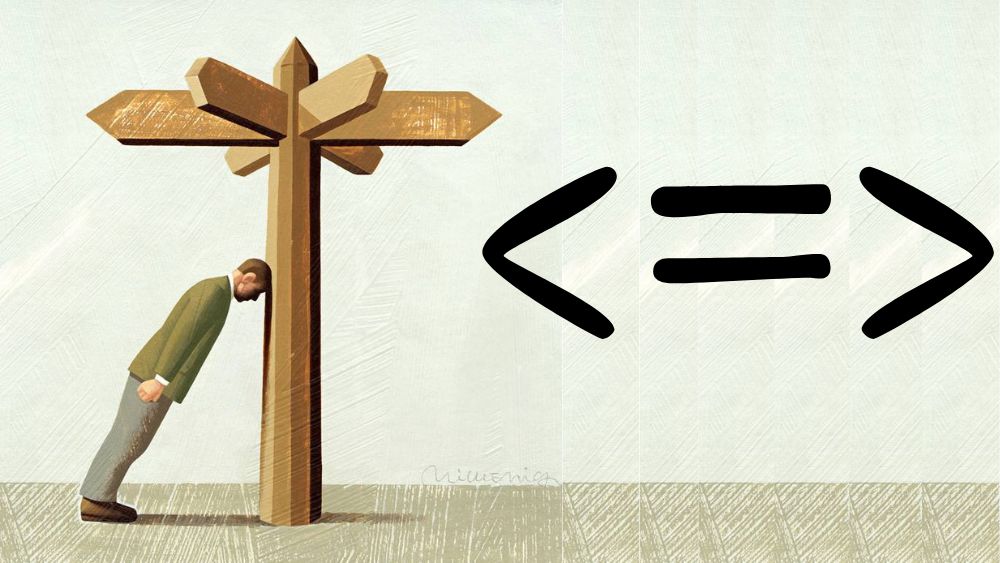
This is ironic, given our obsession with choice. We’re resolutely averting our eyes from the only choice that will lead us to a sustainable future – making do with less.
Instead, fingers in ears and eyes scrunched shut, we march on towards the climate change abyss. We let our leaders prioritise profit, fetishise growth, productivity and efficiency.
It’s not even all about fossil fuel. Leaving all remaining oil, coal and gas in the ground would be a good start, but if we just replace it with another unsustainable addiction (AI, permanent economic growth), our wants will still outstrip our needs.
We fear change, and are infused with consumer culture from birth. We’d rather be pushed, than jump, if we feel our options are being narrowed.
My year as a student in China in 1984/5 taught me that living within our means, making do, cherishing surpluses and tolerating shortages, wasn’t really all that bad. Actually, it was terrific.
To be clear, the conclusions I describe in this article are no more and no less than what I state they are. They are neither an implicit endorsement of communism, nor a secret glorification of poverty.
None of us can know for sure which path will lead to a sustainable future. Liberal democracy, benign autocracy, regulated capitalism, anarcho-syndicalism, science or religion are all viable, in principle, if everyone agrees and moves in the same direction.
But I’m confident that, whether we choose it or not, any least-worst path will require us to learn to live with less, not constantly strive for more.
We only have one planet.
**
In 2021, Robert Stern (SternWriter) founded the See Through Network, a global zero-budget ecosystem of pro bono contributors with the Goal of Speeding Up Carbon Drawdown by Helping the Inactive Become Active.
For more of Robert’s reflections on changes in China, and their global climate significance, see the new See Through Prod-cast series Back And Forth, where he revisits and updates news reports he made as CNBC Shanghai Bureau Chief in the mid-’90s.