
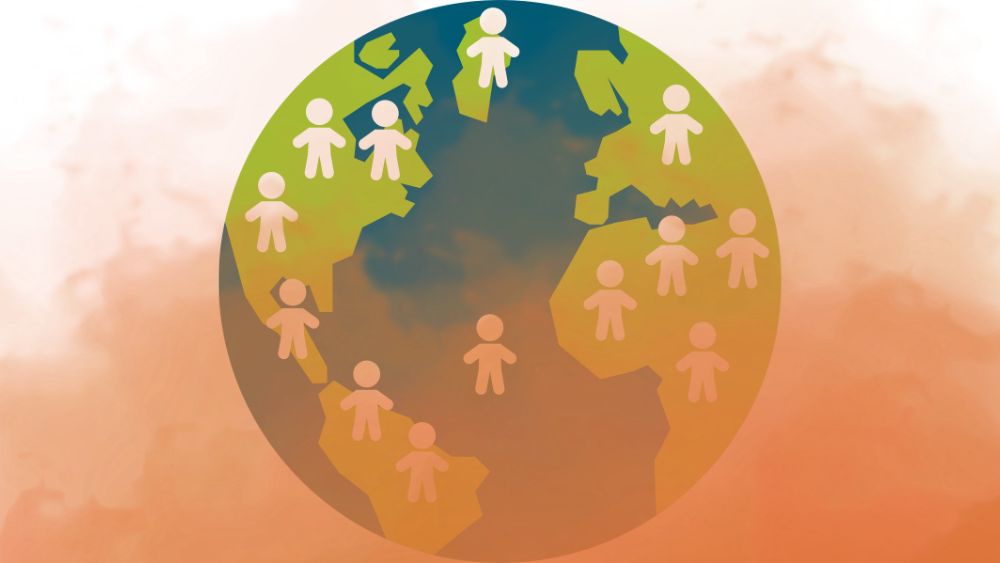
Local solutions might help drive large-scale change, but risk being ineffective for meaningful climate mitigation.
This article questions when community-based solutions help, and when they hinder, effective climate action.
One Step At A Time
In our personal and working lives, breaking things down is a smart way of building things up.
The life coaches are right. If you start every day with a to-do list, it helps make big problems more manageable, and brings discipline, order and purpose.
Breaking big tasks down into achievable smaller steps can speed the journey, while keeping the destination in view.
Up to a point.
Ends, means and goals
One problem is that a to-do list of little goals can only be as effective as the big goal it serves.
For Goals, the devil is always in the detail.
- SCALE: Make your goal too big, and even the sub-goal steps you create to get there can seem overwhelming.
- CLARITY: Create too many sub-goals, and the destination starts getting fuzzy.
- COHESION: Define your goal too loosely, and even the perfect series of sub-goals may lose coherence.
These challenges are more obvious when applied to our personal lives than to big issues like climate action.
So comparing individual-level Goals with species-level Goals should throw light on:
- how useful small, local actions actually are to bigger climate goals
- when and whether community-based actions – whatever their merits – actually help solve our bigger climate crisis.
The problem with personal to-do lists
What’s the biggest, vaguest, fuzziest Goal you can think of? If you only had one item on your daily personal to-do list, can you come up with the least actionable one?
A life coach might give something like this as an example of an unhelpful Goal:
Sort life out
This is not unhelpful because sorting your life out is a bad idea, but because it’s not an easily actionable Goal. Your life coach would gently point out that anyone writing ‘Sort life out’ and nothing else, at the top of their daily to-do list, is unlikely to ever cross it off.
As examples of more practical, actionable personal sub-goals, our life-coach might suggest this kind of list:
Cut grass
Tidy desk
Wash smalls
Pay off credit cards
Email boss re pay rise
Successfully taking a few relatively short, easy steps, the logic goes, generates the momentum, energy and confidence to tackle bigger, tricker ones.
Every journey of ten thousand leagues starts with a single step: great oaks from tiny acorns grow. Both are true, which is why they’ve become cliches.
But this approach has limits. Take ‘breaking it down’ and ‘baby steps’ to an ab absurdum conclusion, and your morning to-do-list might be:
Cut first blade of grass
Cut second blade of grass
Cut third blade of grass
Cut fourth blade of grass
Cut fifth blade of grass
Actionable? Yes.
Useful? No.
Makes you feel you’re doing something useful? Possibly.
Note to self: must save planet
What’s the right level of ambition? What can climate activists learn from life coaches about setting Goals that are realistic without being trivial?
For a start, expecting to leap a huge chasm in a single mighty bound must surely be as unrealistic for us as individuals as it is for us as a species.
What works for self-realisation, should also work for changing the world. Striking a prudent balance between ambition and realism for personal goals might shed light on doing the same for climate activists.
Daily to-do lists with goals like:
Locate Nirvana
Earn enough money
Learn to love
…are as impractical as those listing:
Save Planet
Replace profit motive as prime motivation for capitalism
Decarbonise economy
This category of Goal, whether personal or species-scale, is laudable, but unachievable as daily tasks.
The more ambitious the big Goal, the harder it is to come up with practical baby steps to achieve it.
Reaching Nirvana is hard, but for Buddhists that makes it a great challenge, not a pointless aspiration.
Mitigating the worst impacts of human-induced climate change is also extremely difficult, but hardly a pointless aspiration for anyone wanting to bequeath their children a habitable ecosystem, or who are simply big fans of human civilization.
Statistically-minded Buddhists have attempted to calculate the odds of reaching Nirvana. This may appear to miss the point of Buddhism, but trying to quantify risk/reward is an understandable human impulse. It’s certainbly critical to anyone seeking to maximise the impact of their efforts.
If ‘What’s in it for me?’ and‘What are my chances?” are rational questions for individuals, ‘What’s in it for humanity/mammals?’ and ‘What are our chances?’ must also be reasonable questions for climate activists to apply to what they do.
For both ambitious individuals and effective climate activists, nuanced calculations should provide a sound basis for effective action.
That starts with an achievable goal.
Good Goals and bad Goals
How can self-helpers focused on being their best person, and climate activists seeking the shortest path to a sustainable future, tell the difference between good and bad Goals?
What separates a stretch Goal that’s nonetheless worth pursuing, from an unachievable Goal doomed to be a waste of time and effort?
Easy to ask, harder to answer.
The distinction between a pipe-dream and a reasonable goal defines the human condition. If you reach your impossible dream, you’re a winner. Fail, and you’re a loser. If only we could always tell which is which at the start line, not just at the finish.
Even the dreamiest of pipe-dreamers might hesitate before adding Goals like these to their to-do-lists:
Swallow the Sun
Turn back time
Make black white
To all but the deluded, these are obviously unachievable goals, but then again so were ‘Build a flying machine’, ‘step on The Moon’ and ‘Break the Enigma code’.
Or, maybe, ‘Speed up Carbon Drawdown’.
A Goal like ‘Sort life out’, while fuzzy, is not unachievable, but its fuzziness gets fuzzier the more people are involved.
If it’s unhelpfully overambitious to sort your own life out, attempting to do the same for the other eight billion people on the planet could be 8 billion times more overambitious.
The world tends not to bend towards our will. Managing, tweaking, nudging and redirecting the forces that act on our individual lives is challenging enough, without multiplying it by all people for all time.
So whatever your Goal, it’s perfectly sensible to pitch the scale at which you want to achieve it somewhere in the middle. Somewhere on the dial between the extremes of individual and species.
Like, for example, a ‘community’.
When is a community not a community?
‘Community’ is bandied about a lot, for good reason.
The word generally induces warm feelings. This is why politicians, businesses, advertisers and activists do much of the bandying.
As a social ape, it’s not surprising we humans have positive associations with the notion of being part of a group. But words matter. Humans like to believe we’re impelled by reason as well as evolutionary urges, so let’s try to be more precise.
Let’s start by consulting how a particularly big, successful, global online ‘community’ defines the term ‘community’.
Wikipedia is a global hive-brain community of people committed to facts, accuracy and verifiability. It’s the online hangout of the Factchecker tribe.
Before succumbing to the taxonomist’s cheat move (any bin labelled ‘Others’), Wikipedia’s ‘Community’ page lists five main sub-sections to its definition of the word ‘community’:
- Archaeology: in its literal sense it is synonymous with the concept of an ancient settlement….The second meaning resembles the usage of the term in other social sciences: a community is a group of people living near one another who interact socially.
- Ecology: an assemblage of populations—potentially of different species—interacting with one another.
- Philosophy: European philosophers.. questioned whether the closed, exclusionary, and identitarian models of community found in the traditions of Communitarianism in Anglo-American philosophy and Classical Social Theory, were suitable for our globalized world. However, instead of abandoning the desire to belong in a community, they attempt to reconceptualize community in an open and inclusive manner.
- Semantics: often has a positive semantic connotation, exploited rhetorically by populist politicians and by advertisers to promote feelings and associations of mutual well-being, happiness and togetherness[ —veering towards an almost-achievable utopian community.
- Sociology: fringe groups at the behest of local power elites
Helpful?
We can all supplement our own definitions of community:
- community gardens
- community facilities
- community values
- the LBTGQ+ community
- the off-grid community
- the Flat Earth community
- the patriot community
- the Tutsi community
- the Hutu community
- the Shia community
- the Sunni Community
- the Protestant and Catholic communities
- the oil drilling community
- the impact investing community
- the tree-hugging community
- the carbon drawdown community
Communities can have opposite Goals, indeed be intent on murdering each other, but in the eye of the beholder, all communities are unambiguously good.
Communities as climate solutions
A common response to the overwhelmingly large-scale problem of climate change is to reduce the scale of our Goal.
Often this involves focusing on ‘community’, rather than global issues.
This appeal of dialing down ambition from immediate global action, everywhere, now, to incremental local change over a realistic period is obvious.
What community action loses in scale of ambition, it gains in granularity, immediacy and practicality. You can waste your life trying to change the ocean, but you can make a pond in your community garden in an afternoon.
Operating at community scale obeys the self-help guru mantra of sub-dividing hard tasks into more manageable chunks. But this only has benefits beyond your particular community if only if:
a) your Goal is inherently scalable
b) other people actively try to scale it elsewhere
Most people, caught between the desirable and the possible, tend to assume that anything that benefits the community automatically benefits everyone.
As our list above shows, this is not necessarily true at all. Just ask Hutus, Shia and Protestants how they benefitted projects that benefitted the Tutsi, Sunni and Catholic communities. Likewise for oil drillers and tree-huggers.
But these are just the more obvious contradictions of community actions.
Doing my bit
Much harder to spot are the gaps between what people think benefits the wider community, and what actually does or doesn’t.
Community litter-pickers, for example may produce many benefits:
- Individually, they spend time in nature, meet like-minded volunteers, improve their mental health.
- Their litter-picking colleagues enjoys the same benefits as a mini-community.
- Local residents, even if they don’t pick any litter themselves, benefit from cleaner hedgerows and more sightly parks.
- Local ecosystems, flora and fauna probably benefit from not having man-made rubbish polluting and obstructing their natural habitat.
But ask any litter-picker what the wider benefits are of their local activity, and many will mention things like ‘saving the planet’, cleaning up the environment’, ‘helping nature’ and other high-level claims.
Now try mildly observing that by transferring plastic bottles from the environment to their local dump, they’re actually perpetuating the petrochemical industry (the vast majority of plastic is not recycled, or even downcycled, but buried, burned or banished to poorer countries to be buried or burned).
You are extremely unlikely to be thanked for your observation. You are very likely to be told that they’re ‘doing my bit’.
This phrase is particularly telling.
- ‘Doing’ = taking action, as opposed to doing nothing
- ‘My’ = taking individual responsibility to do good in the world
- ‘Bit’ = small step towards a big Goal.
Very few people ‘doing their bit’ appreciate having any of these three words challenged against their stated big Goals.
Stop lecturing me
For anyone aspiring to be an Effective Climate Activist, such responses are frustratingly understandable.
When you only have a few hours to spare at weekends, or on weekday evenings between the kids swimming lessons and darts night, making a small difference locally seems like just the kind of achievable small step life coaches would approve of.
The more grandiose and broad your Goal, the greater the risk of failure, and disillusion. Those who ‘bite off more than they can chew’, like Extinction Rebellion activists in its heyday, tend to become particularly disheartened when their lofty ambitions aren’t realised. You can only attend so many urgent protest rallies, before you start to wonder if there’s any point in every doing anything.
Like Voltaire’s Candide, after a lifetime of adventure and grand philosophizing you might well end up concluding what really matters is to ‘cultivate your garden’. For every great leader, like Coleridge’s Kubla Khan, decreeing stately pleasure-domes to mark their greatness, there are millions content to grow flowers and vegetables and donate them to the local food bank.
But at least people doing their bit are doing something.
What about those who draw no distinction between worthy local community projects, and global scale do-gooders – and do neither?
Shoulder-Shruggers: no better than Climate Deniers?
We’re all familiar with phrases justifying inaction, because we use them so often ourselves.
It’s exhausting:
- Being ambushed by charity workers rattling collection tins on the street
- Credit card readers asking if you want to add a donation to plant a tree when you pay a bill
- Earnest family members and neighbours trying to talk you into joining their particular community action group.
Shoulder-shrugging, moving on, and avoiding being lectured, nagged or guilt-tripped is a normal human reaction.
The bigger the Goal, the easier the shrugging, and there are no Goals bigger than reversing the impacts of our fossible fuel addiction.
For every reason to take climate action, there are many more excuses for inaction. These excuses can sound different, depending on which part of the world you come from:
- The West: Why should I not fly when the Chinese are building a new coal-powered plant every week?
- China: Why should China bear the burden of carbon drawdown when the countries importing Chinese products are doing nothing themselves?
- Uganda: Why should the Global South be denied the path to prosperity pioneered by the Global North?
- Anywhere: I already recycle my plastic waste – why are you lecturing me to change the law?
But they’re all actually saying the same thing, and the same outcome. They are justifications for inaction that cast the inactive as heroes of their own narratives.
From a climate action perspective, such ‘Whataboutery’ is a counsel of despair.
Whether it comes in climate denier flavour, or ‘what’s the point’ shoulder shrugging, inaction is inaction.
The flip-side of ‘community’ is tribalism
Substitute ‘tribe’ for ‘community’, and the risks of community-based actions reveal themselves more clearly.
Everyone loves a ‘community’. ‘Tribe’, depending on where you’re from, is neutral-to-negative. ‘Tribalism’ is never good. Parse the concept of ‘in-group’ and you get:
- my community
- your tribe
- their cult
Wordsmiths know how to exploit such differences. When it comes to climate, they use them to engineer a tiny gap between denial and despair.
For decades, since oil companies decided to remain as oil companies and not transform themselves into energy companies, this gap has been ruthlessly exploited by expert PR shills hired by Big Oil.
Their goal is defensive, but clear – to promote inaction in whatever form, and frustrate attempts to change business as usual.
Short-term success for Big Oil means long-term disaster for human civilization. Put like that, they people who do this ‘work’ may not exactly be fine with it, but they still do it (mouths to feed, rent to pay, responsibilities to discharge, etc.). Money talks, and we all have to make a living.
It’s unfortunate that just when we needed to address the demand side of our species’s voracious appetite for energy, the richest people and companies in the world are allying their interests with Big Oil.
The data centre expansion demanded by a handful of Silicon Valley Overlords has directly yoked them to massive energy and water resource consumption. Now the AI hyperscalers are marching in lockstep with the oil barons, the influence and coffers of climate inaction advocates have been further boosted.
This puts climate activists in an even tighter bind. With every new record heatwave, flood and drought, the reality of human-induced climate change becomes more evident as a ‘now problem’, not a future risk.
At the same time, the Three-Headed Beasts of Government, Business and Media grow more determined to impede any challenge to business-as-usual.
Functionally, shoulder-shruggers are no better than climate deniers, in the sense they’re doing nothing positive to change things.
Shoulder-shruggers might argue that at least they’re not actively making things worse, like the climate deniers.
Arguably, they are. There are way more passive shoulder-shruggers, carrying on business as usual, than there are active climate deniers.
Complacency is catching. Shoulder shruggers normalise, and validate, climate inaction. Inaction is not harmless.
Is Homo sapiens a ‘community’?
How useful are the solutions to this dilemma we use in our personal lives, when it comes to an overwhelmingly bigger problem like human-induced climate change?
- What if admirable community-focused activities are more self-serving distracting therapy techniques?
- Is there much point in putting out a tiny spark when surrounded by a conflagration?
- Is the moral high ground provided by a tiny hump of much use when a giant steamroller is heading our way?
- Is limiting our ambitions to a particular ‘community’ not practical or realistic, but a cop-out?
These are uncomfortable questions for any climate activist, particularly for those who aspire to make a difference to the oceans, not just create a local wildlife pond.
The shortest path to a sustainable future must surely lie in recognising that:
- the existential problem we’ve created – our fossil fuel addiction – is a species-level problem.
- meaningful solutions must therefore also operate at a species level.
This makes the challenge more nuanced, but helpfully so.
How can we leverage our tribal-level instincts, where our emotional attachments are strongest, in service of our species-level needs, where we’re connected by much weaker gravitational force of reason?
Our primate relatives, like gorillas and chimpanzees, will kill gorillas and chimps from other ‘troops’ in the interests of their own. Their conflicts become more intense as their habitat shrinks. They appear incapable of escaping this paradox, and doomed to place the interests of their community above the survival of their species.
Homo sapiens likes to imagine itself capable of escaping the gravitational pull of our DNA. We like to think our unique powers of reason can propel us to greater heights, where we can perceive the bigger picture, and act in our species, not community interest.
So let’s do our bit.
**
The See Through Network hedges its bets by having both community-based projects and more ambitious global ones, but trying to leverage and scale the former to serve the latter.
For more: www.seethroughtogether.org
Having been curious enough to see how the Network is trying to fulfil its Goal of Speeding Up Carbon Drawdown by Helping the Inactive Become Active, you might even become one of the Active yourself.