
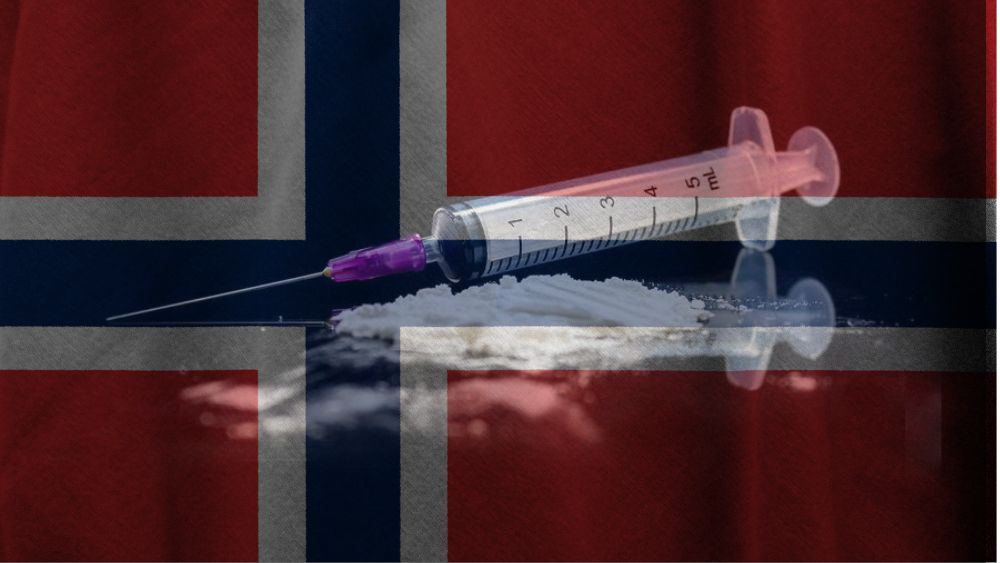
Global Nice Guy Norway could get clean, but keeps pumping its oil while pimping its virtue. If progressive paragons can’t wean themselves off their fossil fuel addiction, the rest of us will just have to kick our habit ourselves.
This article unpicks Norway’s myths about its dirty little habit, to help countries less fossil-fuel ‘blessed’ decarbonise while Norway keeps kidding itself it’s not getting high on its own supply.
Meet Lars
Tall, lean, stylish without being ostentatious, that’s Lars. A very Scandi way for a drug dealer to hide in plain sight.
Lars doesn’t loiter on street corners. He lives in a minimalist-cool zero-carbon home and works in an open-plan zero-carbon office. Lars works short days and takes long holidays, often at stunning eco-tourist resorts.
On weekends, Lars might be with his (equally gorgeous) wife Astrid and charming kids Freja and Svein. In winter, the family skis from their mountain ‘hut’ (more like a villa). In summer, they lark about on the family ‘dinghy’ (more like a yacht).
When Lars and his family aren’t being active outdoors, they’re helping elderly neighbours, supporting community events, and volunteering to help the less fortunate both at home and abroad.
Lars loves his job and takes his work seriously. Professional and courteous at all times, Lars is admirably sensitive to all his colleagues in his diverse workplace. He treats his female boss with exactly the same courtesy and warmth he extends to all his colleagues, and celebrates when immigrant colleagues are promoted over him.
Lars is a genuine team player, always putting collective interests above his own, a personification of Norway’s unofficial Janteloven egalitarian code. He loves his work, is respected in the community, and is good at his job.
If only he weren’t a drug dealer.
The World’s Nicest Drug Dealer
Norway, like Lars, is an exemplary global citizen, in every way – almost.
Pick any league table of human development, and Norway is one of a select elite of ‘usual suspects’ in the top positions.
Their Premier League team-mates are fellow-Scandis and Northern Europeans. You’ll find Lars sipping cocktails and proposing toasts to world peace at the Right-On Sky Lounge (‘great views!’).
Attend any themed party for world leaders in fields like education, social cohesion, transparency, progressive policies, democracy, overseas development, gender and pay equality, etc., and you’ll find Lars in his immaculate lounge suit right in the huddle with his good friends from Iceland, Denmark, Switzerland, Germany and Sweden.
But increasingly, the conversation is turning to the climate crisis. And when it does, something strange happens.
Lars discreetly slinks away from sipping highballs with his usual drinking buddies. He takes the lift down to the basement dive to join the climate denier sleazeballs, and starts shooting up.
Norway at the Climate Denier Club
Norway cuts an odd figure among the Fossil Fuel Peddlars Gang. This is why it deserves particular attention.
As the human-induced climate change bills come in, we’re finding them harder to ignore, or dismiss as ‘freak’ events.
Record heatwaves, floods, wildfires, crumbling infrastructure failing to cope with an ever-shifting ‘new normal’ have put outright climate denial in steep decline globally.
Most of us need little persuasion to slip directly from denial into despair. If we want to make ourselves feel less passive, we call it ‘from mitigation to adaptation’.
But there’s still an exclusive club of countries clinging on to their cognitive dissonance. Significant proportions of their citizens still parrot Big Oil talking points that ring hollow elsewhere: ‘not proven’, ‘natural variation’, ‘solar winds’, ‘hoax’, etc..
These countries cluster at the bottom of public attitudes charts. When you see the Fossil Fuel Peddlars Gang in one place like that, it’s easy to guess the membership criteria.
America, Russia, Saudi Arabia, Iran, Indonesia, and Nigeria are major oil and gas producers. You’d expect to see Norway in that club. But the same countries are also global hotspots for climate denial.
So if the others are Bad Guys for peddling petroganda to justify keeping pumping, why should we let Norway off the hook?
A better class of drug dealer
If including Norway in this Fossil Fuel Peddlers Gang just doesn’t seem right or fair, the question should be, why do we give it a free pass?
This is partly because, like any smart drug kingpin, Norway keeps a low profile, and has a convincing cover story.
- Unlike the world’s biggest oil producers, the USA and Russia, Norway’s leaders don’t dismiss the science as a ‘hoax’. Neither Norwegian politicians nor citizens flaunt their denial publicly. They know it’s a bad look that doesn’t suit their image.
- Unlike the Gulf States, Norway doesn’t use its wealth to cynically undermine COP meetings, or corrupt marquee international sports via sportswashing.
- Instead, it spends some of its sovereign wealth fund, which they call the Oljefondet (‘Oil Fund’) because it came from their post-1969 North Sea fossil fuel bonanza, on green subsidies.
- The Oljefondet even declines to invest in ‘dirty’ coal. Virtuous, if you think air pollution is our only problem. Virtue-signalling, if you understand atmospheric physics. Norwegian schoolkids are taught about the Greenhouse Effect, and the Oljefondt, but are not encouraged to join the dots.
When answering international polls about climate change attitudes, those enlightened, progressive, educated and liberal Norwegians reveal their collective blind spot.
Membership of the Global Development Elite Club has its privileges, but membership of the Fossil Fuel Peddlars Gang also brings certain obligations.
There’s no state denial, but Norway is in a state of denial. It’s probably much deeper, insidious and omnipresent than you might imagine, or indeed than most Norwegians feel comfortable with if they’re forced to think about it.
Norway’s own brand of climate denial feels more like wilful self-delusion. It is, after all, human nature to stretch reality to reconcile its dirty habit with its pristine self-image. The hallmarks of motivated reasoning are not being aware of it, or being inclined to admit it.
Like all the wilfully deluded, Norway is obliged to invent myths to maintain its hero status in its own narrative.
Squint a bit, and these look very much like the kind of things drug addicts tell themselves, and – a little too shrilly – others.
We only deal in the clean stuff
Norway leads the world in low-emissions fossil fuel extraction, setting standards for banning ‘flaring off’ on its rigs, and pioneering carbon capture and storage (CCS) technology, unproven though it remains.
Such truths form the basis for a big lie. Norway’s claims to produce ‘climate-friendly and clean’ oil and gas, or ‘blue hydrogen’ may sound satirically absurd to outsiders, but not to Norwegian ears.
At best, such measures might make Norwegian fossil fuels 2-3% less deadly than, say, Nigerian oil. The other 97% sits on our atmosphere, heating the planet, like any other hydrocarbon molecule from anywhere. Carbon don’t care.
But Norwegians can, and will, tell you all the details of their CCS, and flaring ban, with a straight face, deaf to any hypocrisy klaxon.
We’re helping our neighbours kick their habit
Norwegian gas is better than dirty European coal, or evil Russian gas, apparently.
To retain their heroic self-image, Norwegians must believe their fossil fuel exports demonstrate they’re virtuous global citizens and considerate European neighbours.
‘Contributing to lowering European emissions’ sounds so much better than ‘prolonging our fossil fuel addiction’. It’s a red (pickled) herring in any case. Hardly any Norwegian gas is actually used for power generation, where it can be replaced by healthy renewables. Most of it heats homes and factories.
We could all just use less energy, or course, but to be fair to Norway, no one likes this suggestion. That’s what addiction does to us.
Still this myth, is gratingly self-serving coming from a country where 97% of new cars are EVs, and virtually all their domestic energy is renewable (88% hydro, 11% onshore wind).
As any decent drug dealer knows, don’t get high on your own supply.
We’re the Good Guys, helping to get you clean
Norwegian narratives require them to see themselves as part of the climate solution, not part of the problem.
This means a lot of talk about ‘green transition’, ‘providing expertise for clean tech’, ‘pioneering carbon capture technology’ and other gradualist rationales for delay.
These are long shots, always postponed, forever just over the horizon.
In the meantime the reality is that most of those Norway’s brilliant engineers, ingenious entrepreneurs, generous subsidies, tax breaks, research funds and other resources, remain directed towards pumping more oil and gas.
Just one more hit. I’ll get clean tomorrow.
Not all Norwegians are comfortable with this cognitive dissonance. All that education takes its toll.
Norwegian teachers and parents struggle to explain Norway’s fossil fuel stance to their children without sounding like hypocrites. Norwegian politicians face the same challenge when justifying their policies to their citizens.
Lars may be discreet, but he’s not escaped scrutiny, even at home.
Norway is increasingly uncomfortable both in the Right-On Sky Lounge and the Fossil Fuel Peddlers Gang. This tension may come as a surprise to most people, but it’s not a secret, even in Norway.
Norway’s fossil fuel schizophrenia has been forensically documented by institutions like the Norwegian Climate Foundation. Outside Norway, it’s been engagingly reported in depth by Drilled in their podcast series The Black Thread.
If you’re interested, or still can’t quite believe Lars is That Kind Of Guy, follow the links.
Leave Lars to it
Let’s give Lars some space now.
Norway’s five million citizens must work it out for themselves, just as we have to face our own fossil fuel addiction.
Simply blaming our pusher is not a good look, and no one is forcing us to buy their sweet, sweet hydrocarbons.
If the world’s nicest (and richest) drug dealer can’t kick the habit, the rest of us fossil fuel addicts are going to have to go cold salmon on our own.
If Lars is gonna Lars, what lessons does Norway carry for the rest of us?
How to kick our habit on our own
In a globalised, interconnected world, going it alone is harder than ever. Not many addicts can get clean on their own, and many relapse due to peer pressure.
This drug addict analogy offers some useful signposts to a sustainable future.
Norway isn’t the world’s biggest fossil fuel dealer (#8 globally in gas, #12 in oil), but its outlier status as global Nice Guy makes it a particularly instructive cautionary tale.
Don’t count on the peddlers
Lars may be a nice guy, but his gear is still lethal.
Norway’s cognitive contortions to maintain its self-righteous self-image demonstrate how delusional it is to trust your dealer to help you kick your habit.
If we allow ourselves to be convinced that Lars’ stuff is better because it’s 3% less lethal than Randy’s, Sergei’s or Mohammed’s, that’s on us.
Instead of taking responsibility for our own futures, we’re creating a co-dependency with Lars’ own self-delusion.
We don’t have to let the future profits of Lars, or any other members of the Fossil Fuel Peddlers Gang, be our problem.
Be alert to hypocrisy. Call it out. Don’t indulge the self-serving fantasies of those who benefit from Business As Usual.
Keep your fellow-addicts awake
Enveloped in our comfortable drug fug, going along with beguiling lies is easy. Confronting uncomfortable truths is hard.
The Fossil Fuel Peddlers Gang basement dive feeds a variety of excuses for climate inaction, suitable for all types of addict:
- For the refined palette, there’s the upmarket fine dining section, where suave sommelier Lars can reel off Norway’s subtle Scandi selection of misinformation.
- If you prefer exotic flavours, allow Mohammed’s Bedouin Tent to tempt you with a fusion menu blending international standards with Middle Eastern mystery. Claims to be porkie-free, but isn’t.
- Hungry for the whole hog, with all the trimmings? Try Sergei’s Dacha featuring the robust flavours of classic Russian lies, or Randy’s Rib Joint for all-American fast-food fibs. Both leave you in a worry-free coma, until you wake up or the place gets flooded or burnt down around you.
But all these lies, disinformation, misinformation, whether cynical ploys or genuine self-delusion, feed the same appetite. They may as well be designed to obstruct climate action, and promote climate inaction.
Silver bullets like carbon capture, arguments about gradual green transitions, and the subtle yoking of fossil fuels to other issues like energy security, are all crafted by expert storytellers.
They’re backed by decades of experience and unlimited funds. Big Oil’s storytellers know every trick in the book to bewitch addicts into succumbing to our stupor.
- Resisting relapse requires recovering addicts to educate themselves and maintain constant vigilance.
- Know the myths, spot the spurious and specious arguments, and call them out.
- Honk loudly when you hear them, and you may jolt less alert fellow-addicts from their torpor.
Stick with friends who are trying to get clean
- When you find another recovering addict, embrace them and don’t let go. Hang out with others with the strength of will to fight the addiction and do positive stuff together.
- Ignore the calls of your former addict friends to re-join the party. Be strong,
- Don’t abandon or waste energy vilifying those who are still addicted. It’s not their fault.
- Look out for others who can benefit from your community. If they relapse, you’ll be there to support them and guide them back on track. They’ll do the same for you.
It gets worse
Messengers are only as effective as the strength of their voices.
Climate activists can only be effective if they can reach out, inspire, engage and motivate the inactive. The shortest route to sustainability requires many loudspeakers everywhere.
Changes in media ownership mean climate activists are obliged to take the long way round, and their loudspeakers are muted, or hogged by climate deniers.
Overt censorship is easy to spot. Encouraging self-censorship, or programming algorithms to favour climate lies over drawdown truths, is less obvious, but more effective.
Old and new media are increasingly owned by billionaires who profit from business as usual. They see rapid carbon drawdown as a threat to their short-term financial interests.
Having gifted social media giants the means of production by donating our eyeballs to the Attention Economy, we’re now vulnerable to being manipulated to promote their quarterly results.
Big Oil is the most obvious obstacle to carbon drawdown, but the oil barons no longer top the Rich Lists. Their successors, the tech bros, outgun them, but are increasingly becoming allies in obstructing carbon drawdown.
This alliance complicates the route to sustainability.
Norwegian schools, Nigerian hospitals, Russian oligarchs and Exxon shareholders were already direct beneficiaries of fossil fuel consumption.
They’re now joined by powerful forces that benefit indirectly, and whose interests now directly align with those of Big Oil.
…and worse…
Our Silicon Valley Overlords sought reputational gain from publicising their green credentials until the AI boom.
Now emissions targets threaten their market dominance, Google, Amazon, Meta et al are abandoning their ‘lofty goals’.
To read their justifications, you’d be forgiven for thinking data centres were an Act of God or natural phenomenon, rather than a business decision voted on by a board of directors. If nothing else, it’s a timely reminder that actions are more important than words.
Social media giants, already massively wealthy and influential, are now rebranding themselves as ‘AI hyperscalers’. Their valuations are now driven by their promise of a massive expansion of energy-intensive data centres.
If built, these GPU warehouses will add massive increase in energy demand, on top of our current consumption, just when carbon emissions targets require a reduction. The tech bros are as power-hungry as their data centres. And the oil barons.
Rocket ships won’t save the tech bros, no matter how many zeroes they add to their net worth. They’ll end up being drowned, burned and shrivelled by our collective inaction eventually.
Wealth can insulate you from atmospheric physics for a bit, but not for ever. In the meantime, our new mega-rich appear bent on making as much money as possible while they still can, reflexively resisting any regulations that constrain them.
All of which is to say that if you find the names in the next section unfamiliar, it’s not your fault.
…finally, The Hope Bit
Here are some real-world examples of recovering fossil fuel addicts who, collectively and individually, have chosen to resist the fossil fuel industry’s bribes, threats, blandishments, traps and sabotage, and actively pursue a sustainable future.
Internationally, locally, in geographical and virtual communities, like-minded countries, institutions and individuals impatient for urgent climate action are doing it for themselves.
International
Following recent COPs, around a quarter of the participating nations have had enough. Frustrated at the UN process’s glacial progress, exasperated at how the annual meeting to arrest climate change has been captured by oil-producing nations and Big Oil lobbyists, 50-odd countries are participating in some form or other in a breakaway group for countries that take sustainability seriously.
The first International Conference on Transitioning Away From Fossil Fuels took place in Santa Marta, Colombia, in 2026. The second is scheduled for Tuvalu in 2027.
Fifty countries are of course less powerful than 200 countries, but kicking out the fossil fuel peddlers has freed them from their bureaucratic sabotage.
Local
There are countless local initiatives driven by citizens who are fed up with waiting for national leaders, or even local governments, to take the lead.
Instead of listing examples here, we encourage you to search for one near you. Like we said, too many to mention, and there’s not much point in mentioning a local initiative that’s not near you.
Taking the initiative yourself to do your own research may turn out to be your first step in moving from climate inactivity to effective climate action.
Not all community movements that claim to ‘save the planet’ actually reduce any carbon, so if that’s what you want, choose carefully.
But even the act of acting independently at a local level, outside the structures controlled and funded by big interests or governments, could be a small step in the right direction.
You never know, it might push a business or politician into prioritising carbon drawdown over whatever else they currently consider more urgent and important.
Virtual community
The Internet isn’t all bad.
It has its own carbon footprint, like every human activity, but its carbon footprint is way lower than driving somewhere to meet in person, and can link like-minded people with a single click.
If those like-minded people’s shared interest isn’t cat videos, motor racing or pornography, but measurably reducing carbon, the climate benefits vastly outweigh any downsides.
Your choice of virtual communities is vastly broader than your local community activists. If you can’t find at least one climate action NGO, charity, network or movement that matches your own passions, you’re just not looking hard enough.
Whether you’re most motivated by emissions reduction, biodiversity, nature conservation, tree-planting, indigenous rights, education, gender equality, petitions, protests or demonstrations there’ll be something for you.
Rousing yourself from your fossil fuel addict stupor is the first step. Even if you’re too busy to take action, there are plenty of groups who’d be grateful for some money.
The Fossil Fuel Peddlers Gang is not short of a dime, after all.
Just look at Lars’s lifestyle.
***
See Through Together is part of a global network of people working pro bono to Speed Up Carbon Drawdown by Helping the Inactive Become Active.
To liberate its work from funding issues, and insulate it from the distraction and compromise that money brings, it has no bank account.
At the moment, the Network is short of
- IT professionals
- Games designers
- Animators/illustrators
- Digital Marketers
But there are roles for anyone willing to contribute any time, services or goods in kind.
For more: www.seethroughtogether.org