
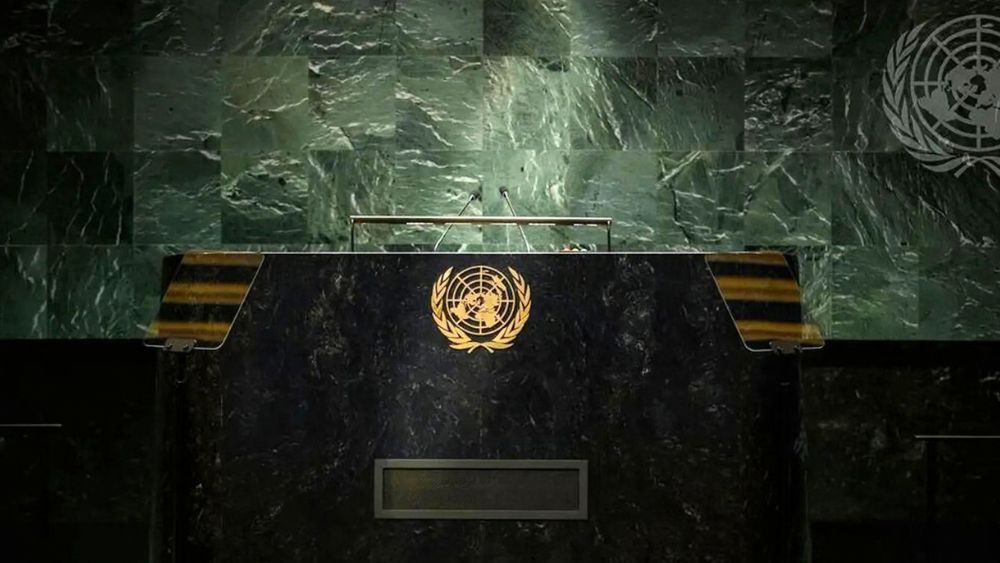
Imagine a leader with no election to win, no donors to please, and no border to defend, giving it to us straight. Here’s a draft of the climate speech our leaders believe they can’t risk giving, we’d rather not hear, and which delivers truth without false hope.
This article imagines the climate speech our political leaders presume they can never make, guaranteeing the opposite of everything they promise.
Why now?
My dear fellow humans,
Why, after decades of dishonesty, have our leaders decided now’s the time to be honest with you?
Only they can tell you why they asked me to give this speech.
Why do they think that [INSERT YEAR HERE] is finally the time to face reality and stop promising the impossible?
Ask them what they were waiting for, and yourselves why you haven’t demanded it before.
What finally burst the bubble of complacency our leaders spent so long inflating?
Presumably, the very events scientists and activists have been warning us about for the past [INSERT NUMBER OF YEARS SINCE 1978 HERE] years.
But now, as it has been since 1978, is a time for action, not blame or recrimination.
No matter how late it’s come, how much their delay has made our catastrophe worse, or the reasons behind this sudden change, facing reality is better than pretending it’s not happening.
The Hope Bit
You probably want to hear me say that our leaders’ decision to finally face facts is a sign of hope.
But constantly dangling hope, always just out of reach, has always been part of the problem.
Blaming our leaders is easy, but if you need to find fault, we’re all to blame.
Think of all the thousands upon thousands of ‘hope bits’ you’ve heard in your lifetime.
How many did you act on?
No matter how carefully leaders, scientists or activists deliver ‘the hope bit’, no matter how clear the call to action on which that hope depends, what we hear is:
It’s fine.
Carry on.
Someone else will fix it.
This speech won’t risk the same outcome.
Before you despair, you may as well hear me out.
Not promising false hope is not the same as declaring our situation is hopeless.
Like all roads to hell, our best route away from the future we’ve created is not paved with good intentions.
It’s made of pragmatic, concerted action.
It always was.
There are still many escape routes available, but the best ones all require ignoring the dead ends of ineffective hope-dangling, and sticking to the path of reality.
To go forward, we must grow up.
Do As I Say, Not As I Do
Our leaders know we prefer simple solutions to complex problems.
That’s why they’ve avoided being honest with us for so long.
But don’t blame them. We’ve also allowed them to mislead us.
Wilful ignorance and self-serving hypocrisy is part of what makes us human. Our ability to recognise our weaknesses might enable us to rise above them.
When a small child, learning to speak, says ‘I need an ice-cream’, we laugh. We gently explain the difference between ‘need’ and ‘want’.
Yet when we say ‘I need a better smartphone’, ‘I need another holiday’ or ‘I need a bigger car’, we take offence at anyone who tells us these are wants, not needs.
When we reassure a small child, upset by a dog being run over or a terminally ill grandparent being taken to hospital, we know our promise that ‘everything will be all right’ is hollow, false and meaningless, but reckon a child is too immature to handle the truth.
Yet when politicians reassure us ‘The solution to our problem is simple’, we choose to believe them and still consider ourselves mature adults.
Simplicity and Complexity
When life is complex, simplicity is appealing,
When we evolved 300,000 years ago, we created Gods to account for our unimaginably complex world.
Over the past 200 years, as our understanding of Earth’s complex life systems grew, so did our ingenuity for inventing machines that made our planet more uninhabitable.
We didn’t know this when we started powering our machines with ancient sunshine compressed into coal, peat, oil and gas.
But we’ve known for [INSERT NUMBER OF YEARS SINCE 1988 HERE] years it’s taken for our leaders to admit defeat.
If you want a simple answer, it’s this: we can still be the heroes of our own narratives.
We just need to change our story from one that elevates us individually, to one that nurtures us collectively.
The Human Bus
One thing our leaders have always been right about is the power of storytelling.
The best way to communicate complex problems and solutions is not bullet point lists or graphs, but a great story: striking images, beguiling yarns, personal anecdotes or powerful parables that trump a thousand datasets.
Here’s a 39-word story.
**
Someone on the bus points out we’re hurtling towards a cliff edge.
Most of the passengers demand why no one is offering us ice cream.
One person tries nudging the steering wheel and tapping the brakes.
Is it you?
**
Those last three words were a chance to cast yourself as the hero.
The heroic act is being the individual who tries averting collective disaster. The story is silent on whether your heroic wheel nudging or brake tapping works.
Our leaders have long told us our acts of heroism will ‘save the planet’.
Why did we let them dangle such an unachievable, meaningless goal?
It’s because, so far, we’ve demanded ice cream.
Ineffective Calls To Action
Joining the chorus demanding ice cream has, until now, been much easier than risking being the passenger trying to avert disaster.
Most of us just want to be left alone. We like the idea of change, which is why we’ve been happy for our leaders to promise it.
But we also fear change or would rather wait for someone else to change first.
Until now, our leaders have promised us three different ice-cream flavours:
- ‘No Problem’: it’s all a hoax. Ignore the doomsayers. Infinite growth is possible on a finite planet.
- ‘Silver Bullet’: it’s not a hoax, but we can carry on as some smart people are bound to come up with a simple solution when things get really bad.
- ‘Product Recall’: if we swap out bad dirty energy for good clean energy, we can all carry on as normal. Buy EVs and solar panels, and all will be well.
No Problem and False Hope
Until [INSERT YEAR HERE], offering ice-cream has proved effective at winning elections and suppressing dissent.
But they melt in the real world governed by physics, not fantasy.
- No Problem: our environmental, ecological and emissions problems are real and measurable. All are driven by our insatiable appetite for ‘growth’, supercharged by our fossil fuel addiction, and incompatible with business as usual.
- Silver Bullet: Future tech is not available now. It may be harmless to tell small children fairy tales, but banks don’t lend money on Tooth Fairy or Santa Claus collateral. Gambling our future on nuclear fusion, carbon capture or geoengineering is reckless, delusional and infantile.
- Product Recall: harnessing sun and wind requires burning a huge additional volume of dirty energy to dig up the huge amount of minerals needed to make clean energy. Our resource-based conflict wouldn’t end, just continue its transfer from oil-rich countries to rare-earth-rich countries.
Physics is indifferent to our hopes, whether real or false. Nudging the steering wheel or tapping the brakes at least obeys the laws of physics.
They could divert us to a less worse path.
Neophobia: pros and cons
Physics is not even our biggest problem. We are.
We like to think we’re rational, driven by logic and evidence. We’re not – yet – robots.
Most of us, most of the time, focus on our individual fates, that of our families, clans or tribes, not the fate of our species. We ape our elders, and stick to the script.
Human neophobia is our greatest weakness and strength. It saves us from death by strange mushroom. Our ability to overcome it has made us the planet’s dominant species.
When we do nothing, we call our neophobia ‘prudent’, ‘sensible’, ‘smart’.
When others fail to do what we want,we call their neophobia ‘lazy’, ‘hypocritical,’ ‘complacent’ or ‘evil’.
The result is the same – inaction. Motivations, while important, don’t change physics.
The real world
Only taking action, irrespective of the motivations driving it, can have real world outcomes.
Say you want rocks broken. The options that have worked for our leaders until [INSERT DATE HERE) have been:
- Bribery: pay us enough money
- Coercion: point a gun at our head.
- Overt Persuasion: convince us rock-breaking will benefit us.
- Covert Manipulation: make us think rock breaking was our idea.
They’ve worked, until now.
We’re responsive to tax cuts and subsidies, having guns pointed at our heads, persuasion and manipulation.
Bribes and guns are expensive but effective. Persuasion and manipulation are cheaper, but less efficient.
All these methods would work to get us to nudge steering wheels and tap brakes.
Keep it simple
Keeping it simple doesn’t guarantee success, but our leaders have found it makes us more amenable:
- Simple framing: identify a single, familiar obstruction denying us what we want. It’s Them.
- Simple goal: describe a single, achievable want. Life without Them.
- Simple action: offer a single, simple solution: Stop Them. Kill Them. Lock Them Up.
The key to moving us from inaction to action is our emotions.
Getting us all riled up, or ‘emotionally engaged’, is straightforward.
Recently, it got a lot easier, when we invented a new tool.
We could use it to dig us from our hole, but so far we’ve used it to bang each other about the head.
Tech could help, but isn’t yet
Until [INSERT YEAR HERE] social media has been used to monetise our emotions at scale.
Our richest and most influential no longer derive their wealth and power from fossil fuel. Now they exploit our eyeballs.
The Oil Barons mined the earth for atoms and joules. Their richer and more powerful Silicon Valley Overlord successors mine the Attention Economy for ones and zeros and dopamine microdose ice-cream.
More outrage from us means more money for them. Their interests align with the Oil Barons. They direct our anger towards internal bickering that maintains business as usual.
They could programme their platforms to urge us to nudge steering wheels and tap brakes, but there’s more money in dopamine ice-cream.
Our leaders once welcomed the Overlords. Maybe they’ve asked me to deliver this speech because they’re ashamed of their lethal ice-cream addiction.
There have always been heroic passengers trying to steer the bus away from the cliff or slow it down, but:
- They’ve needed money, as that’s what we value most.
- The rich haven’t given them money, as change threatens their wealth.
- Greenwashers have come up with Wheel Nudge and Brake Tap flavour ice cream.
That’s why it’s taken us until [INSERT YEAR HERE] to face reality.
Facing reality means growing up, stopping talking about solutions, and starting to respond with action.
Solutions vs Responses
Emissions graphs keep rising, tipping points are passed, species go extinct, but we keep doing the same thing.
We’ve long known Business As Usual is collectively disastrous, yet have chosen to be individually inactive.
This speech is not a morality tale of virtue rewarded and evil punished. It’s not a tale at all, it’s real life.
It’s unfair that those least responsible for warming our planet are the first to drown, burn and shrivel.
But we already know what happens when we wait for a solution that’s fair to everyone. It leads to [INSERT YEAR HERE].
Hydrocarbon molecules, like trees and plankton are indifferent to our storytelling ice-cream. They’ll probably outsurvive our species, unless they join the other victims of the Holocene, Earth’s sixth mass extinction event, and the first induced by a single species.
Let’s stop dreaming of Solutions. Let’s start acting on Responses.
No more distracting ourselves with happy endings. It doesn’t matter who’s telling the story.
Any surviving descendants won’t care about our favourite flavour of ice-cream.
Effective Calls To Action
If you want to try nudging the wheel or tapping the brakes, click here.
If that’s too much trouble, or it’s too complicated, you could always demand ice-cream instead.
**
This article was prompted by the thought experiment proposed by Nate Hagens, of the Great Simplification. It shares much of his logic, and differs only in its call to action.