
When Flight and Fight appear impossible, Freeze is an understandable option, but will still kill you. Here’s a way out.
This article clocks our climate crisis through the lens of an ethical dilemma
A Parent’s Dilemma
Your newborn baby is about to be killed in four different ways:
- A businessman auctioning its organs to the highest bidder
- A soldier pointing a gun to its head
- A plastic bag smothering its mouth
- A flood about to drown it
What do you do?
Our current answer
Nothing. We turn our backs and carry on.
The dilemma is so overwhelmingly appalling most of us just prefer to ignore it.
Anyway, it’s usually someone else’s baby. This makes it easier to ignore.
Whenever babies die, however, we must blame someone.
We usually pick one of the four assassins to blame, before trying to get on with our own lives.
Somehow, this provides more closure than blaming all four, or the forces that link them.
But blaming is not doing, and in the face of infanticide, doing nothing is clearly the Wrong answer.
The Right answer
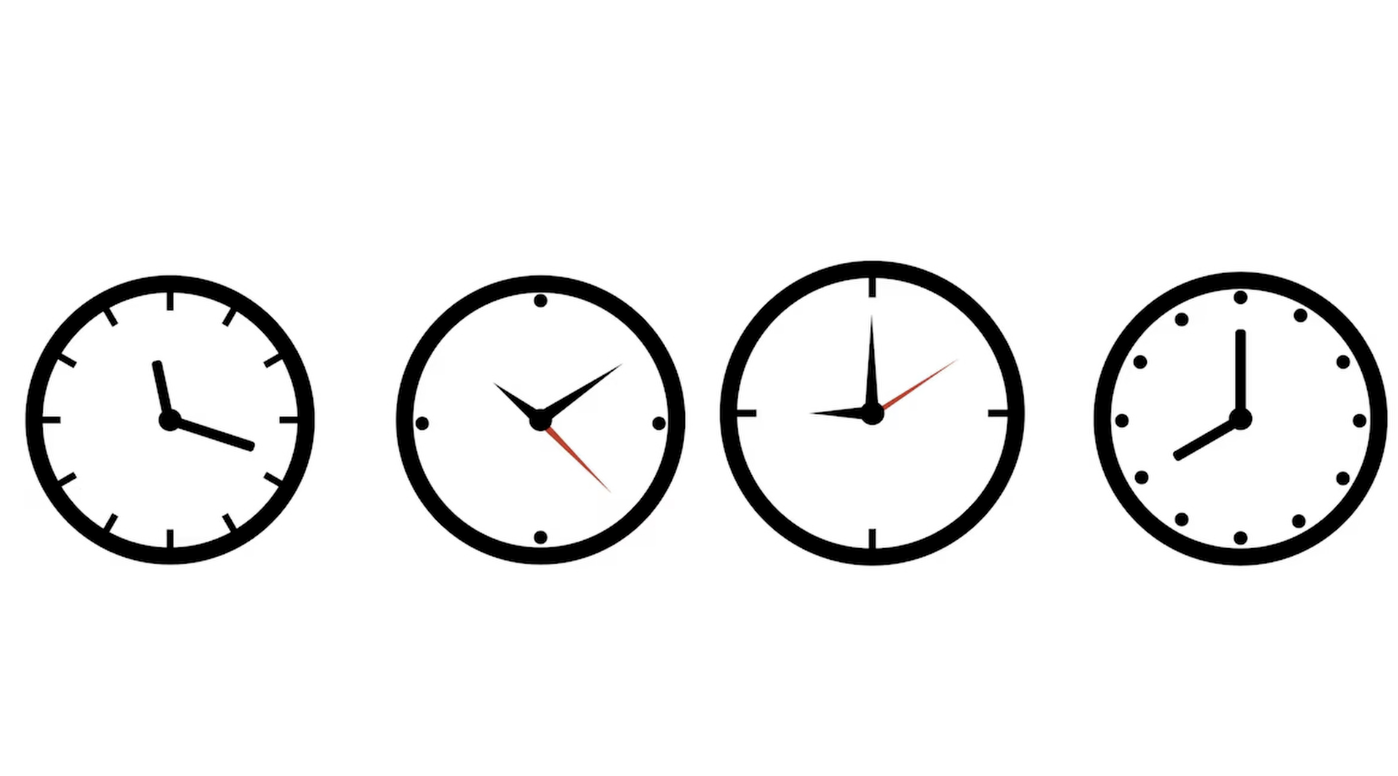
The Right answer begins with looking at the clock.
Or rather, clocks.
The key to the dilemma
This provocative challenge is based on an observation by metals investor Craig Tindale that governments, businesses, banks and billionaires tend to act according to one of four different clocks:
- Corporate
- Conflict
- Consumption
- Climate
Timing is everything. The cosmos, evolution, macrofauna, human lifespans, geology, tectonic movement, bacteria etc. all operate in parallel universes.
All clocks, including the Four Clocks, are intertwined, but each governs its own realm.
Corporate Clock
(Represented by the businessman auctioning your baby’s organs).
The Corporate Clock sets the pace for business. It re-sets at least every three months, when quarterly results are published, but is often consulted more frequently.
Many, including journalists, examine the corporate clock, measured in stock prices, on a daily or hourly basis.
Human or robot traders seeking arbitrage advantage follow this clock microsecond-by-microsecond.
Conflict Clock
(Represented by the businessman pointing a gun to your baby’s head).
The Conflict Clock measures the political risk that the outbreak of war will send all the corporate clocks haywire.
It is usually examined over a period of 1-5 Earth years, as there are too many variables for it to be useful much beyond that.
When The Bulletin of The Atomic Scientists set their Doomsday clock at 7 minutes to midnight (midnight bringing nuclear Armageddon) in 1947, the only mechanism they used was the likelihood of war.
By January 2026, when they re-set the Doomsday clock to a record 85 seconds to midnight, they’d included various other non-conflict mechanisms. But local wars triggering global nukes remains a key driver.
Consumption Clock
(Represented by the plastic bag smothering your baby’s mouth).
The Consumption Clock is the one used by futurologists, long-term investors, and businesses from toothpaste makers to data centre builders, with a strategic remit to secure customer and supply chains.
It measures the distance between our current reality, and sustainability. The Consumption Clock tracks the gap between our unsustainable extractive trajectory, and a sustainable circular economy.
This clock has different displays:
- How many multiples of Earths we’d need to sustain various countries’ current consumption levels
- The calendar day on which various countries overshoot their annual sustainable allocation
Fundamentally, the Consumption Clock measures how quickly we’ll exhaust our Earth’s resources to sustain our current lifestyles.
Climate Clock
(Represented by the flood about to drown your baby).
The Climate Clock counts down our remaining time before human-induced climate change exterminates our species, ending human history.
This implies a binary state of OK/Screwed, which takes an extraordinarily complicated mechanism to generate an Alive/Dead outcome.
In reality, Climate Clock interfaces depend on the degree of civilizational collapse you reckon constitutes it ‘being all over’.
From an individual, rather than species, perspective, the Climate Clock counts down to the time when you – or maybe your baby – will avoidably drown, burn or shrivel to death.
The nature of the problem
The Baby and Four Assassins dilemma may sound like one of those impossible ethical thought experiments, requiring you to kill one person directly to avoid the otherwise inevitable indirect deaths of dozens.
It is, and it isn’t.
It’s similar in that it simplifies an inherent human dilemma. Emotive images like infanticide eliminate noise in order to help us focus on the signal.
The more complex the problem, the more noise, and the more useful such thought experiments are, at least for those prepared to confront them.
Those who find the very notion of an imaginary baby being threatened too triggering to contemplate, and so disengage with the thought experiment, can’t learn from it.
But the Baby & Four Assassins dilemma is fundamentally different from conventional ethical dilemma – the kind that asks you to choose between throwing one person over a bridge to activate a switch that will save a full oncoming train facing otherwise certain oblivion.
Those ethical dilemmas all imply that you will survive to wrestle with your guilt.
The assassins threatening your baby in our example will come for you next.
They are implacable, inseparable, and all benefit from your inaction.
Clock-watching pros and cons
Returning to our original thought experiment dilemma, just looking at one or more clocks will, of course, do nothing to save your baby.
But like all such ethical dilemmas, the point is not to solve the puzzle, but to illuminate its true nature.
The more dangerous and complex the threat, the more important it is to truly understand it.
From a human perspective – whether as a species, parent, or individual – threats don’t come more important or dangerous than survival.
So, after a quick glance at the Four Clocks (there are infinitely more than four, but let’s keep this manageable), how can we actually save the baby?
Fight, Flight, Freeze
Under stress, humans tend to default to aggression, escape, or inaction, or Fight, Flight or Freeze.
Other options are available – some add Flop, Fawn, Friend – but these are regarded as special human sub-categories. In the animal world, its the Three Fs. And we’re animals.
So how might Fight, Flight and Freeze play out with our baby & multiple assassins dilemma?
Let’s examine our options, in reverse order.
Freeze
Freeze is by far our most common real-world response.
Freezing can be conscious – i.e. staring at the baby to see what will happen.
More often, when it comes to issues like climate, conflict, capitalism or consumption, it’s unconscious. We turn our back on the baby, rather than see what happens. We’d rather not know, and come up with some reason to excuse our reluctance to confront inconvenient or uncomfortable realities.
So far in our 300,000-year evolution, Freeze has not always been a bad choice.
Doing nothing and hoping for the best can sometimes work. When you open your eyes, you may find the sabre-tooth tiger has eaten your nasty neighbour in the next cave, leaving you better off.
Freeze’s appeal is obvious to the freezer. Every rabbit frozen in the headlights is presumably thinking ‘This might just work’.
Depending on the driver’s eyesight, reactions, attention and character, the rabbit might be right. It may live a long life, and pass on its Freeze genes to generations of bunnies.
But for observers, Freezers appear irrational. In the case our our baby’s quadruple assassin threat, it’s suicidal.
- Corporate requires us to be reliably passive in order to continue Consuming.
- In Conflicts, if you stay huddled in the trenches having thrown away your gun, something will end up killing you, whether a bayonet, sniper’s bullet, poison gas, frostbite, starvation, disease or infection.
- If we keep pumping greenhouse gases into the sky, Climate will kill not just us, but all our assassins too.
Flight
Like the Freeze-philic bunnies, our Flight-prone ancestors have lived to pass on their genes to us. You could call Flight a ‘runaway success’.
The problem is that on a planetary scale, there’s no escape. The Climate assassin is categorically different from the other three.
We can snatch the baby from the Corporate auctioneer, gunman’s barrel and consumer’s plastic bag, but we can’t dodge a flood, fire or famine.
With nowhere to run away to, Flight is not an option. We only have one planet, and we’re Earthbound.
For those who think its only poor people who can’t dodge floods, fire and famine, loads of money only buys a short delay from the inevitable.
Future alien archaeologists might observe that the billionaires with the most power to Fight to protect babies, instead chose to profit by selling the organs of other babies for profit, and thought they could protect their own babies by building rocket ships.
Fight
That leaves Fight. Here’s a three-step guide:
- Step One: don’t look away. Face the problem.
- Step Two: glance at the clocks. Understand the problem.
- Step Three: take action. Anything that fights any assassin will help.
If you choose Fight, consider visiting www.seethroughtogether.org, and see what a global network of people with the shared goal of Speeding Up Carbon Drawdown by Helping The Inactive Become Active is doing.